<?xml version="1.0" encoding="utf-8"?><feed xmlns="http://www.w3.org/2005/Atom" ><generator uri="https://jekyllrb.com/" version="4.3.4">Jekyll</generator><link href="http://www.jessicaharllee.com/feed.xml" rel="self" type="application/atom+xml" /><link href="http://www.jessicaharllee.com/" rel="alternate" type="text/html" /><updated>2026-01-02T10:31:40-05:00</updated><id>http://www.jessicaharllee.com/feed.xml</id><title type="html">Jessica Harllee</title><entry><title type="html">Try everything</title><link href="http://www.jessicaharllee.com/notes/try-everything/" rel="alternate" type="text/html" title="Try everything" /><published>2020-12-07T17:56:00-05:00</published><updated>2020-12-07T17:56:00-05:00</updated><id>http://www.jessicaharllee.com/notes/try-everything</id><content type="html" xml:base="http://www.jessicaharllee.com/notes/try-everything/"><![CDATA[<p>In September we launched a total rebrand of Primary, including a new logo, fresh packaging, and a totally redesigned <a href="http://primary.com">primary.com</a>. I had been a part of rebrands before, but never one that was so closely coordinated across so many teams at the company. It was thrilling.</p>

<div class="jh-text-cms__img jh-text-cms__img--full-width">
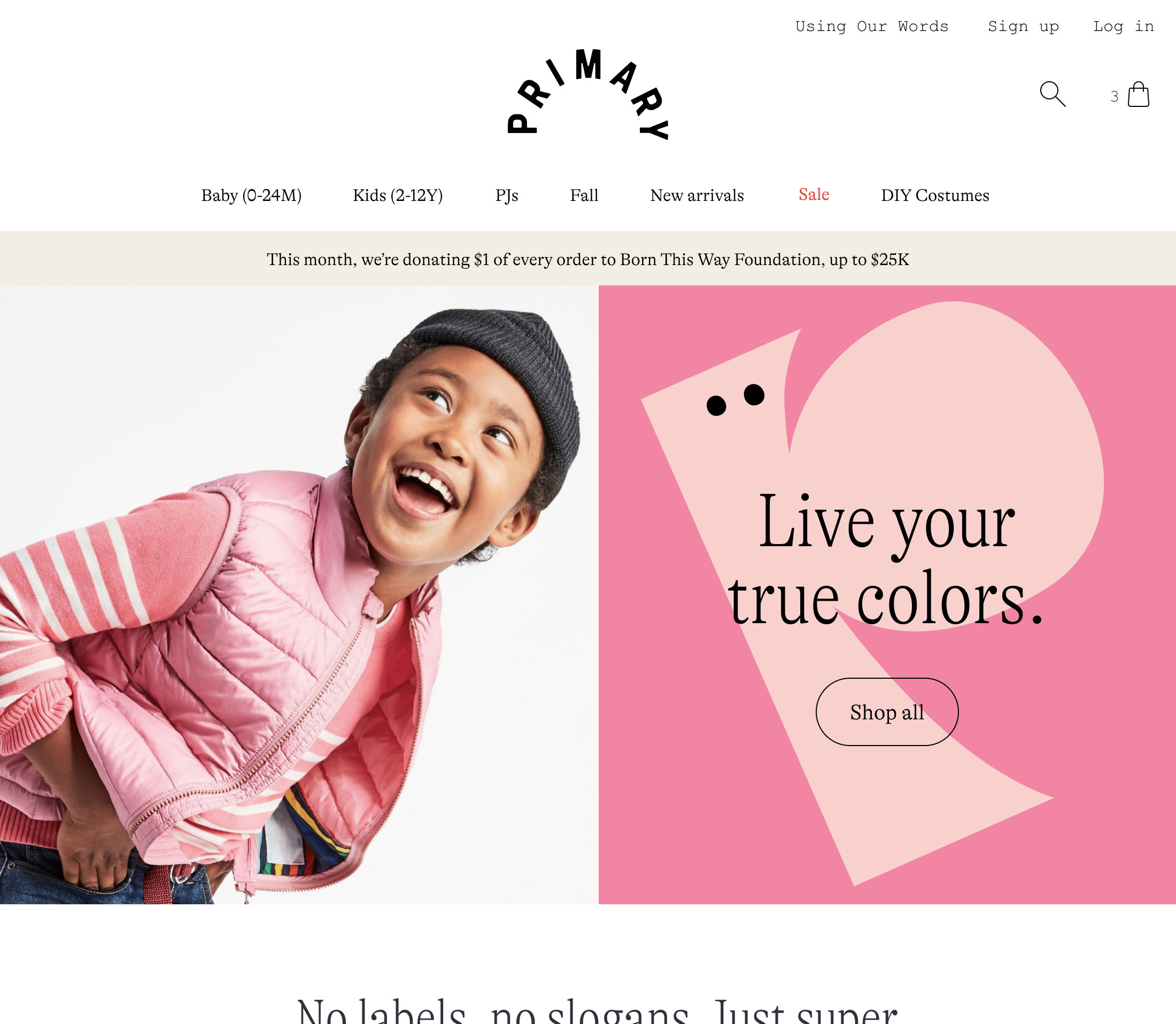
  <img src="/uploads/try-everything-primary-homepage.jpg" alt="Screenshot of the rebranded homepage. Simple navigation next to banner with a kid in Primary clothes and a bright pink background." />
  <p class="jh-text-cms__img__caption">The Primary homepage when the rebrand launched.</p>
</div>

<p>A few weeks later, we got some feedback from the leadership team. After sitting with the new site for a little while and having a chance to use it (rather than looking at a static mockup), they realized that something was off about the site navigation. The new logo, which usually appeared against a brand color in our marketing and print materials, was on a white background on the website. And it just didn’t feel right.</p>

<div class="jh-text-cms__img jh-text-cms__img--full-width">
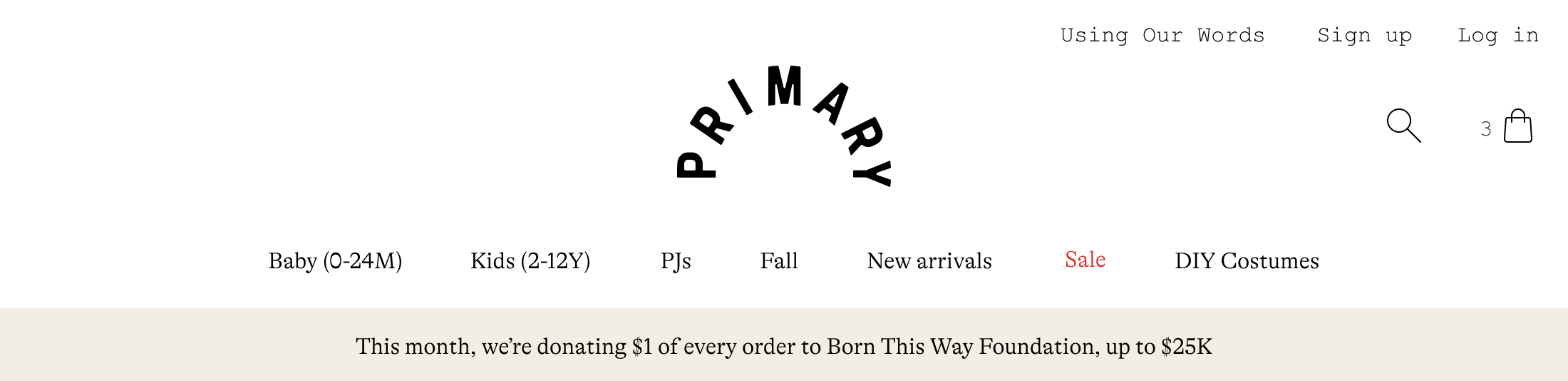
  <img src="/uploads/try everything - primary nav original.jpg" alt="Close-up of the desktop navigation. White background, logo in the middle in black, with black text links in a row underneath." />
  <p class="jh-text-cms__img__caption">The rebranded site navigation when we launched.</p>
</div>

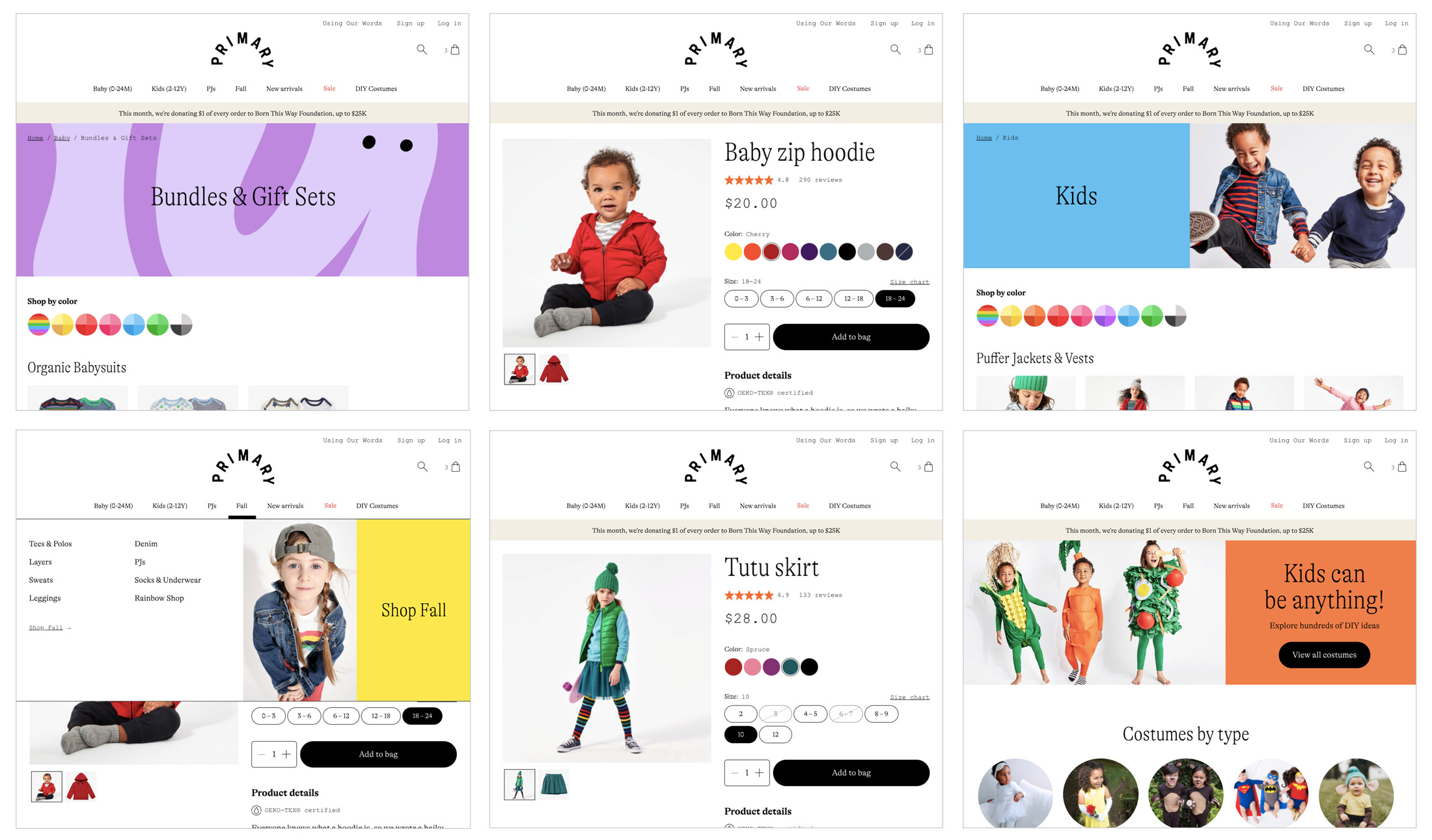
<p>The white background had been a deliberate choice. Our clothes are known for their bold and inclusive colors, and our new branding (developed by <a href="http://wearecollins.com">Collins</a>) embraced that and gave us a huge palette of 28 colors to work with. When figuring out the best way to incorporate color on the website, I had originally tried bringing it into the navigation, but found that it was incredibly challenging to pick colors for the nav that would work against all of the different banners, photography, and illustrations we wanted throughout the site, each bringing their own sets of colors. In the end, we went with a simple, white navigation that would allow the content on the page to really pop.</p>

<div class="jh-text-cms__img jh-text-cms__img--full-width">
  <img src="/uploads/try-everything-color-examples.jpg" alt="Screenshots of different pages using color, including a purple banner, a blue banner, and photos." />
  <p class="jh-text-cms__img__caption">We intentionally kept the navigation minimal so the colors on the page, especially in the headers, could pop.</p>
</div>

<p>Our leadership team had a really good point, though. If we were going to own color, and be consistent with the way we were treating the logo on other channels, we’d need to find a way for the logo to appear against color in the site navigation. And I had absolutely no idea how I was going to do it.</p>

<p>Like so many other designers, when I first hear a problem, I quickly visualize in my head how I might solve it and what that might look like. When I tried to picture the impact of adding color into the navigation, all I saw was chaos. I ran through a few scenarios in my head (background color? some kind of color blocking?) and they all seemed like terrible ideas. I’m sure my manager, <a href="http://capwatkins.com">Cap</a>, could see the skepticism all over my face as we talked through how to approach this. Even though I couldn’t think of a solution, I knew that I needed to at least give it a shot. So, I got to work.</p>

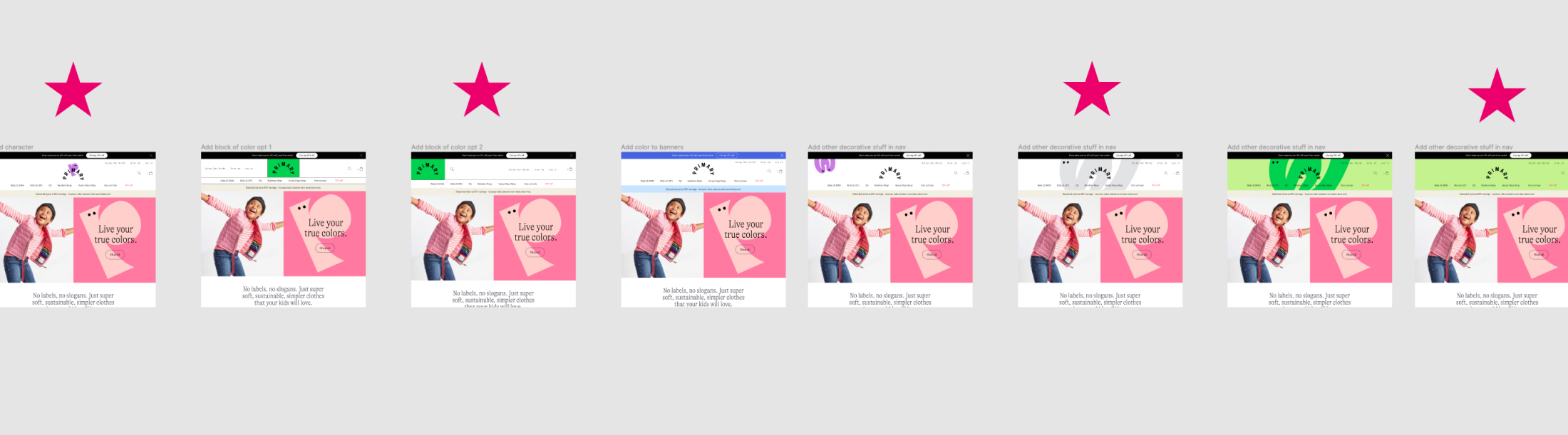
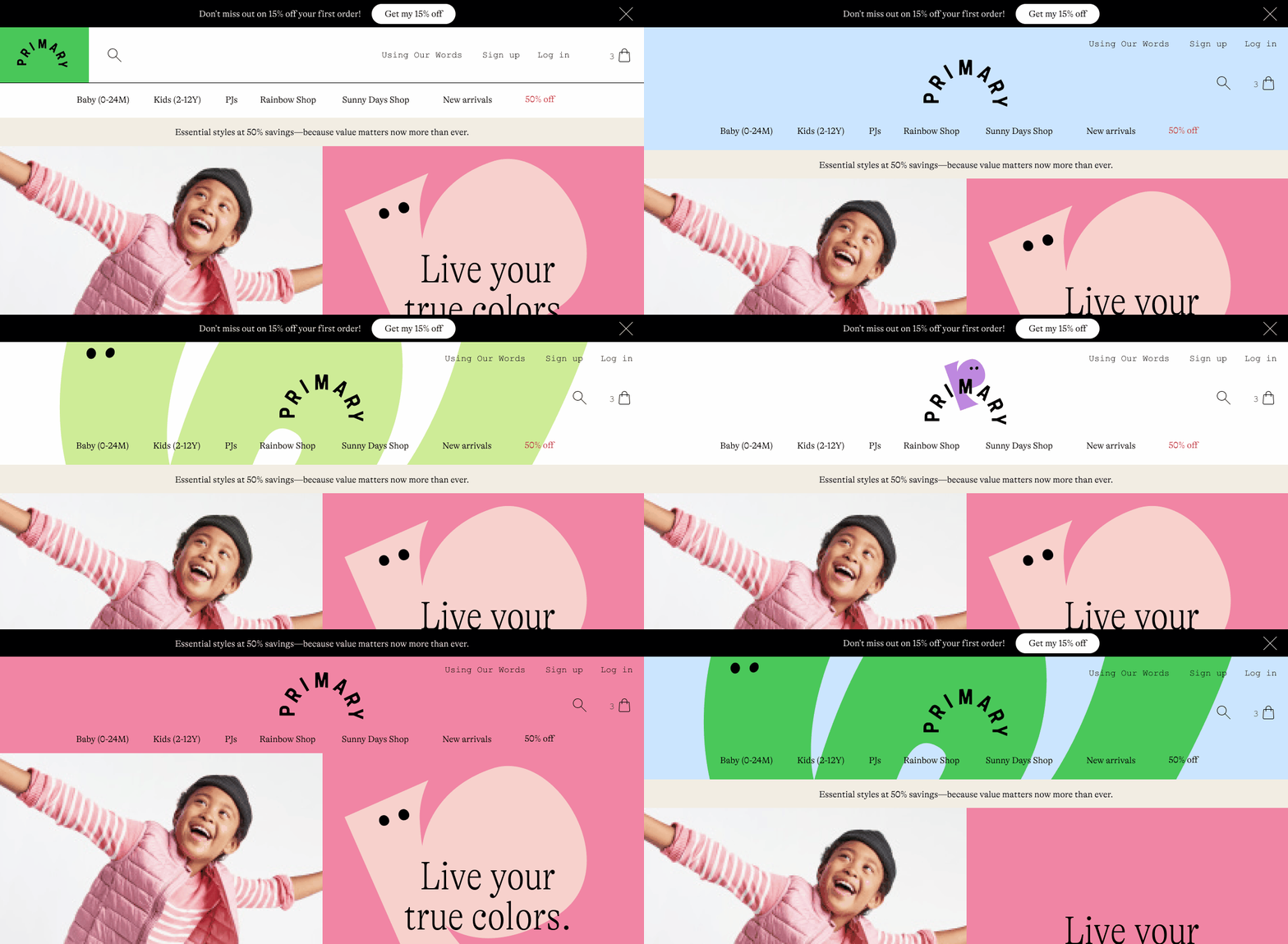
<p>Every day for a week, I tried out dozens of different options for the navigation, shared them for feedback, then tried again. I tried different background colors. I tried color blocking. I tried bold colors, pastel colors, and neutral colors. I tried adding a character, our new illustration elements, for some texture. I tried moving the contents of the nav around and even removing elements. I resurrected old design directions for the navigation from when we were first designing it. I even tried solutions that weren’t explicitly bringing color behind the logo, in the hopes that they might bring more color to the nav indirectly. Then, when I hit a point where I had no ideas left, I would share the Figma link with Cap, post it in our design Slack channel, or bring it to critique. We’d eliminate the directions that were terrible, then star the ones that seemed remotely promising. And then I’d start the process all over again.</p>

<div class="jh-text-cms__img jh-text-cms__img--full-width">
  <img src="/uploads/try everything - starring.jpg" alt="Figma artboard with different options, some of which have stars above them." />
  <p class="jh-text-cms__img__caption">I drew stars in Figma next to the options we decided were worth continuing to iterate on.</p>
</div>

<p>I didn’t like anything that I was showing. Some of the directions were truly embarrassing; they’d make you question whether I deserved my job title. But I showed them anyway. I was genuinely stumped and hoped that one of my goofy mockups might spark some feedback that would unlock a new direction. Or, at the very least, if I needed to admit defeat and tell the leadership team that I just didn’t see a way forward, I’d have evidence that I had truly tried everything.</p>

<div class="jh-text-cms__img jh-text-cms__img--full-width">
  <img src="/uploads/try everything - all the things.gif" alt="Animation rotating through a few dozen different iterations." />
  <p class="jh-text-cms__img__caption">Different attempts at bringing color into the navigation behind the logo.</p>
</div>

<p>A week later, I was at the point where I was ready to give up. Nothing was looking promising. In my 1:1 with Cap, we walked through all of the different mockups for the fifth time. “Okay, I have one more idea,” he said. “What if we did something like this version you did with a character, but instead of cropping in tightly, it’s more like, popping in from the top?” I did the thing where I quickly sketch it out in my mind. Not bad. “Okay, I’ll try it out!”</p>

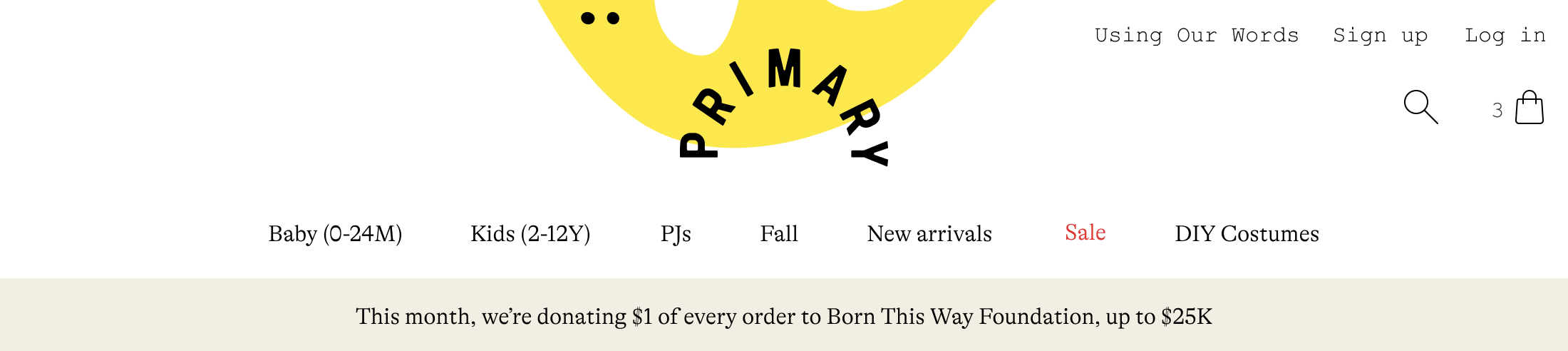
<p>I went back to Figma and placed a character behind the logo, as if it were a little creature hanging from the top of the screen. It was a splash of color, but not too intense. And because it was anchored to the top of the navigation, it never touched the content directly under the nav, eliminating my fear of the colors clashing. After all of that, finally something that worked.</p>

<div class="jh-text-cms__img jh-text-cms__img--full-width">
  <img src="/uploads/try everything - primary nav with character.jpg" alt="The new navigation with a yellow character sitting behind the logo" />
  <p class="jh-text-cms__img__caption">The updated site navigation with a new splash of color.</p>
</div>

<p>We sent a screenshot to the leadership team, who loved it. A week later, it was live on the site.</p>

<p>This update to the nav is not the most groundbreaking or clever solution. It almost seems obvious in retrospect. But I truly don’t think I would have arrived here if I hadn’t tried absolutely everything. It took all of those mediocre ideas to find something that struck the right balance between all of the constraints. One idea inspired another idea inspired another idea. Instead of immediately declaring that it wasn’t possible (which I was inclined to do), I gave it a shot and was able to solve the problem.</p>

<p>Trying everything lets you get the bad ideas out, and helps you understand why they’re bad ideas. Understanding what doesn’t work and why can help you get closer to understanding what does. Those bad ideas can also spark new ideas. It reminds me of having to do 100 thumbnail sketches for college design projects; the point isn’t to have 100 ideas, but to go through a process that frees your mind of the bad or obvious stuff so that you can get to the good stuff.</p>

<p>I’m not writing this because I’m perfect at trying everything. If anything, I’m writing this as a reminder to myself of how important it is not to skip steps. (Seriously, someone will probably need to send me this very blog post in the future, and I will be annoyed but then laugh and thank them for it.)</p>

<p>I’ve been thinking about that moment where I quickly visualize the solution to a problem a lot. Sometimes it can really serve me well. I’ve gotten really fast at design execution over the years, and part of that is the speed with which I can cut through possible directions to find something that works. But it can also be to my own detriment. I can mistake the speed of understanding an idea for being able to bypass the actual work it takes to arrive at a good solution. Instead of approaching a problem with curiosity and an open mind, sometimes I’m guilty of quickly drawing conclusions.</p>

<p>Solving problems is a process. Experience can help you solve problems more quickly, but doesn’t replace doing the work. Even when I’m not sure that there <strong>is</strong> a solution, the least I could do is try.</p>]]></content><author><name></name></author><category term="design" /><category term="primary" /><category term="process" /><category term="lessons learned" /><summary type="html"><![CDATA[A design problem that I initially didn't think was solvable until I actually tried to solve it.]]></summary></entry><entry><title type="html">Website archive</title><link href="http://www.jessicaharllee.com/notes/website-archive/" rel="alternate" type="text/html" title="Website archive" /><published>2020-10-17T17:41:00-04:00</published><updated>2020-10-17T17:41:00-04:00</updated><id>http://www.jessicaharllee.com/notes/website-archive</id><content type="html" xml:base="http://www.jessicaharllee.com/notes/website-archive/"><![CDATA[<p>I’ve kept a personal site since 2000, when I discovered Angelfire and taught myself HTML and CSS. My website was a creative outlet for me throughout high school, and for awhile I was even putting up a new site design every few weeks (truly cannot even imagine doing that nowadays). I’ve saved nearly every version of my site, and decided to put up a small archive of past layouts for your viewing pleasure.</p>

<p><a href="http://jessicaharllee.com/archives">View my website archive</a></p>

<div class="jh-text-cms__img">
  <a href="http://jessicaharllee.com/archives" class="jh-d-block"><img src="/uploads/EkJNDY1XkAEzuvH.jpeg" alt="Screenshot of my website from 2002, with photos of the band Hey Mercedes, blue text boxes with white justified type, song lyrics, and a repeating checkered background." /></a>
  <p class="jh-text-cms__img__caption">My website circa 2002.</p>
</div>

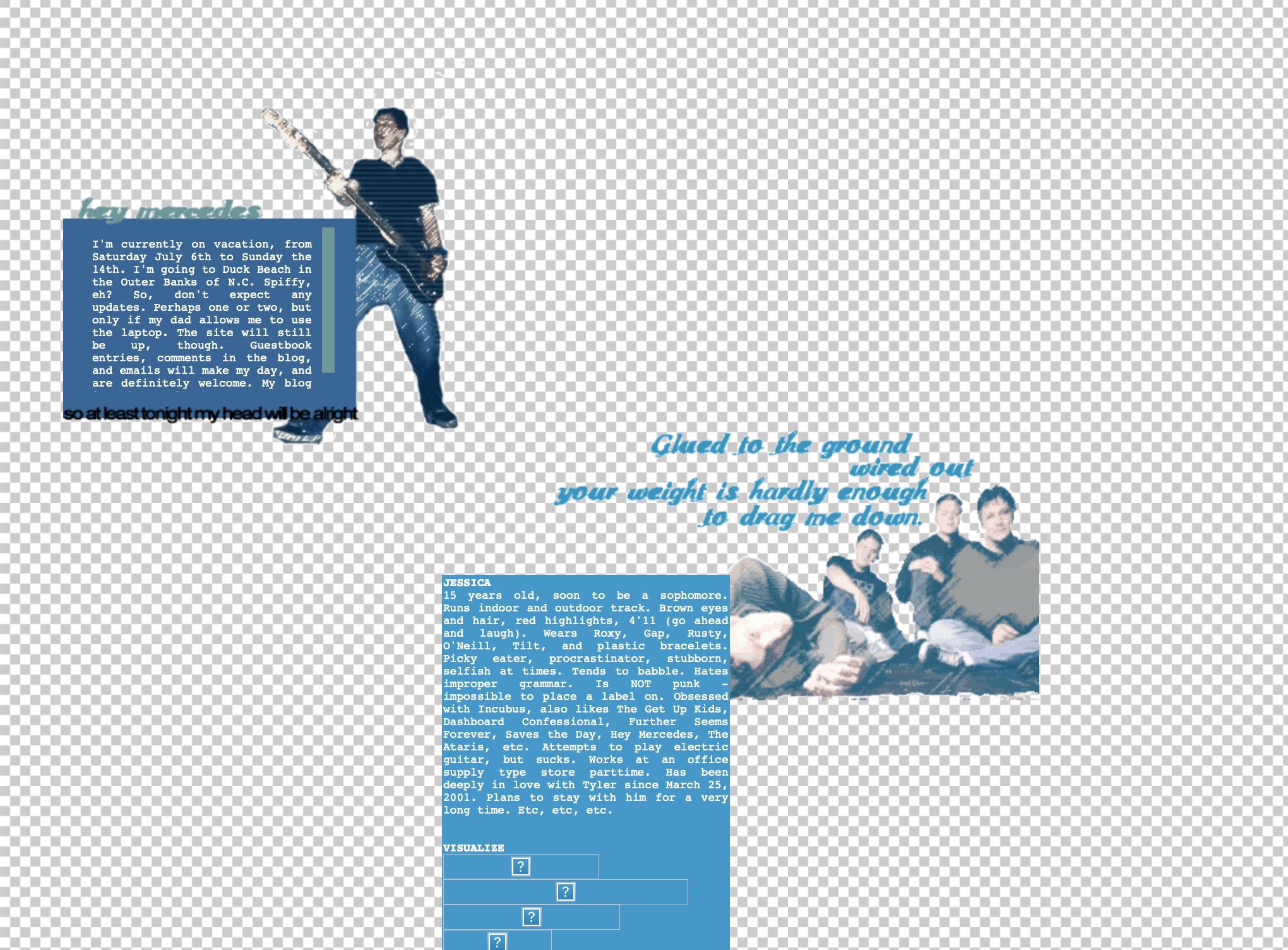
<p>While I’m extremely embarrassed by most of these sites, I love how they capture a moment in time, both of myself and of the internet. The original design and code are mostly intact, so you can view the source and see how nearly everything was absolutely positioned or built with an image map for awhile, and how garbage-y the CSS was. Despite how much I wanted to delete it, I’ve also kept most of the original writing :facepalm:</p>

<p>Best viewed on desktop at 800x600, of course.</p>]]></content><author><name></name></author><category term="design" /><category term="dev life" /><summary type="html"><![CDATA[I published past layouts for my personal site dating back to 2002.]]></summary></entry><entry><title type="html">Good challenges vs. bad challenges (Etsy last lecture)</title><link href="http://www.jessicaharllee.com/notes/good-challenges-vs-bad-challenges/" rel="alternate" type="text/html" title="Good challenges vs. bad challenges (Etsy last lecture)" /><published>2019-11-12T16:22:00-05:00</published><updated>2019-11-12T16:22:00-05:00</updated><id>http://www.jessicaharllee.com/notes/good-challenges-vs-bad-challenges</id><content type="html" xml:base="http://www.jessicaharllee.com/notes/good-challenges-vs-bad-challenges/"><![CDATA[<p><em>This is a slightly modified version of my Etsy last lecture, given September 9, 2019 during my last week at Etsy. Last lectures are an (optional) Etsy tradition in which departing employees share parting wisdom with their coworkers. There aren’t really any rules, prescribed topics, or required levels of polish for a last lecture; it’s up to the lecturer to decide what they think is important to share during their hour. I decided to share some raw thoughts about dealing with challenges, and thought I’d share it here with you.</em></p>

<hr />

<p>Hi! For those of you who don’t know me, my name is Jessica Harllee and for the next two days I’m a staff product designer on the Core Buyer team. I’ve been at Etsy for five and a half years. And this is my last lecture.</p>

<p>My favorite last lectures are the ones that are full of stories, and are really open and honest. I’m going to do my best to do the same here. This means I’m going to be telling some stories about things that have been really hard for me here. It’s really, really important that you know that this is not a laundry list of reasons why I’m leaving Etsy. If anything, these are the reasons why I’ve stayed at Etsy for so long.</p>

<p>I wanted to talk about something that’s been on my mind for the past six months.</p>

<p>If you want to learn and you want to grow, you need to challenge yourself. You have to get out of your comfort zone and try something you’ve never done, or that you didn’t think you could do. Learning is supposed to be a little uncomfortable, otherwise you’re not learning. It’s supposed to be challenging.</p>

<blockquote class="jh-text-cms__img jh-text-cms__img--full-width twitter-tweet"><p lang="en" dir="ltr">How do you know if something is the good kind of challenging (pushes you to grow and stretch) versus the bad kind of challenging (not something you can/should do)?</p>&mdash; Jessica Harllee (@harllee) <a href="https://twitter.com/harllee/status/1118284489069858821?ref_src=twsrc%5Etfw">April 16, 2019</a></blockquote>
<script async="" src="https://platform.twitter.com/widgets.js" charset="utf-8"></script>

<p>But how do you know when something is the good kind of challenging versus the bad kind of challenging? You know what I mean? Like, there’s the kind of challenging that really pushes you, and you come out the other side even stronger and wiser than before. You feel capable of anything. And then there’s the kind of challenging that is nearly impossible to overcome. It brings you down a notch. It feels bad. Without challenges, we don’t grow or develop new skills. But not all challenges should be treated equally.</p>

<p>I’ve been in search of the answer to this because I’ve been through a bunch of challenges recently, and I didn’t have a nice framework in my mind where I could easily be like, this challenge is good! Just stick it out! Or, this challenge is bad! Get out now before it destroys you!!</p>

<p>So to answer this question, I thought I’d reflect on a bunch of challenges that I’ve encountered over the past few years in my career. Maybe some of these challenges will be similar to challenges that you’ve encountered, too. And hopefully by the end of this, you too will have a framework for understanding what’s a good challenge, and what’s a bad challenge.</p>

<p>A quick note: I’d be remiss if I didn’t acknowledge the fact that I experience many privileges, and that overall, I’ve felt very safe in my job here. All of that dictates how I’ve been able to respond to challenging situations, and more importantly, how other people have responded to me. I’m sharing what worked for me when I was faced with challenges, but I also recognize the role that privilege plays in that.</p>

<div class="jh-text-cms__img jh-text-cms__img--full-width">
  <img src="/uploads/journey-map-01.jpg" />
</div>

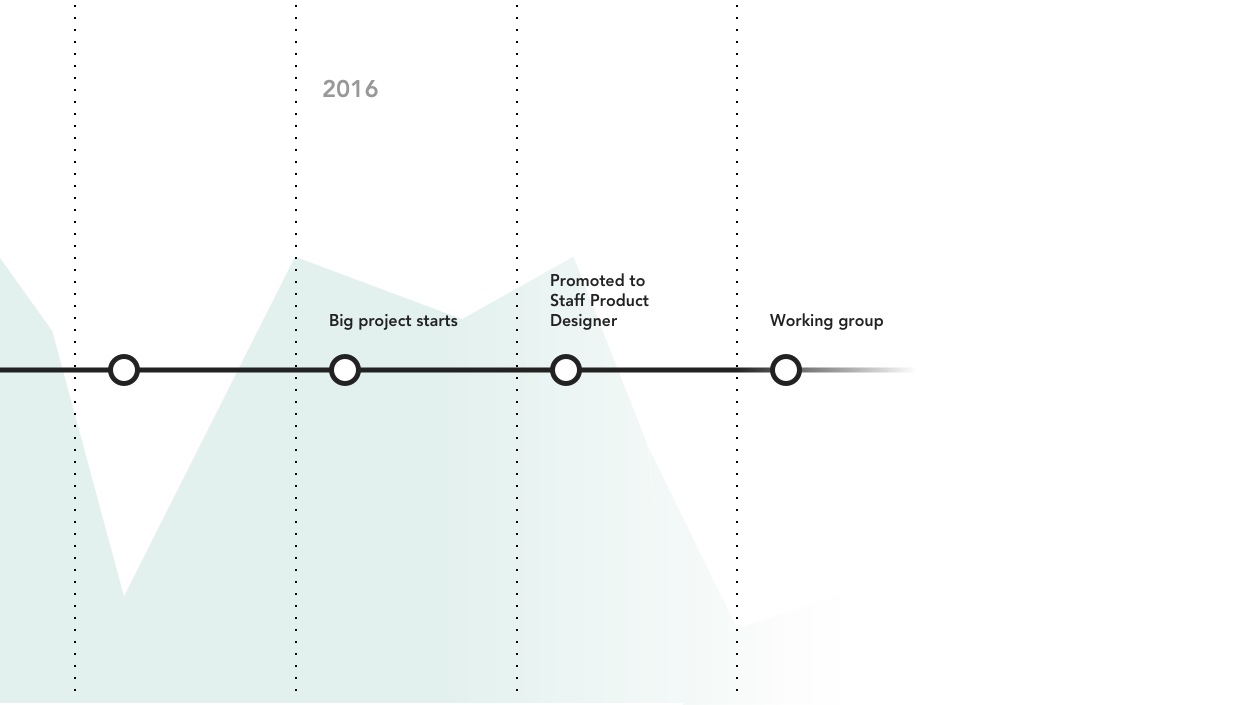
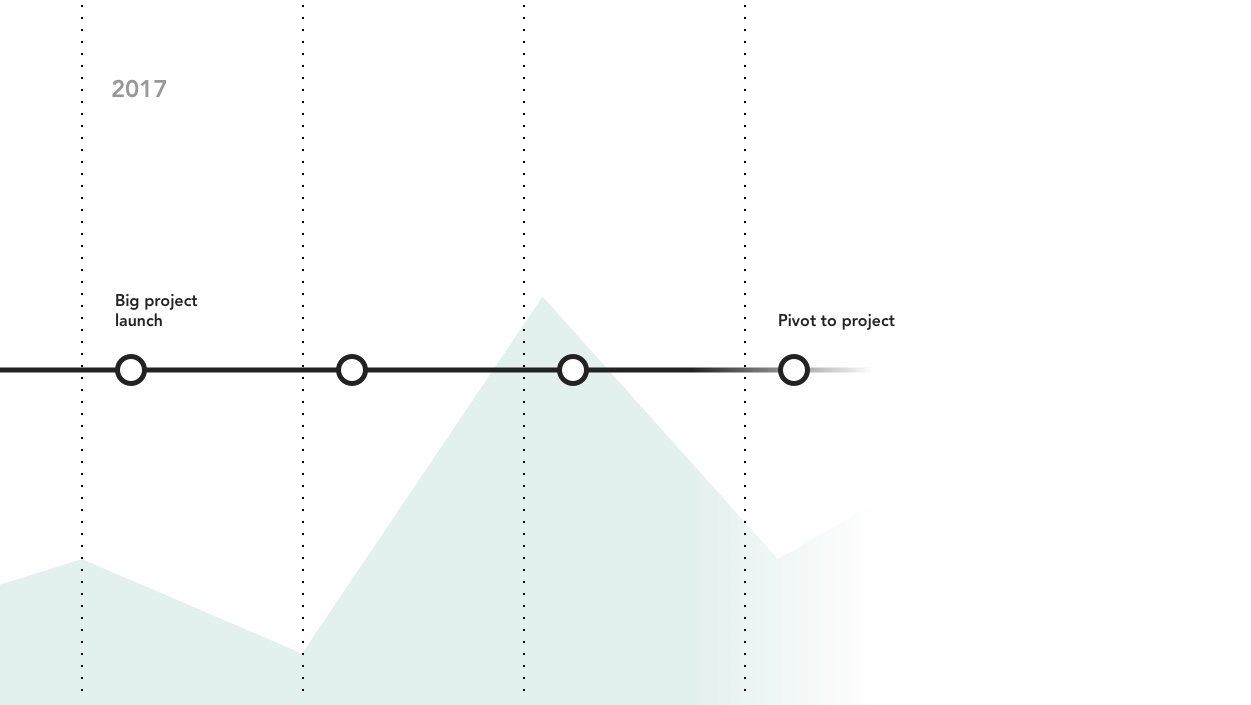
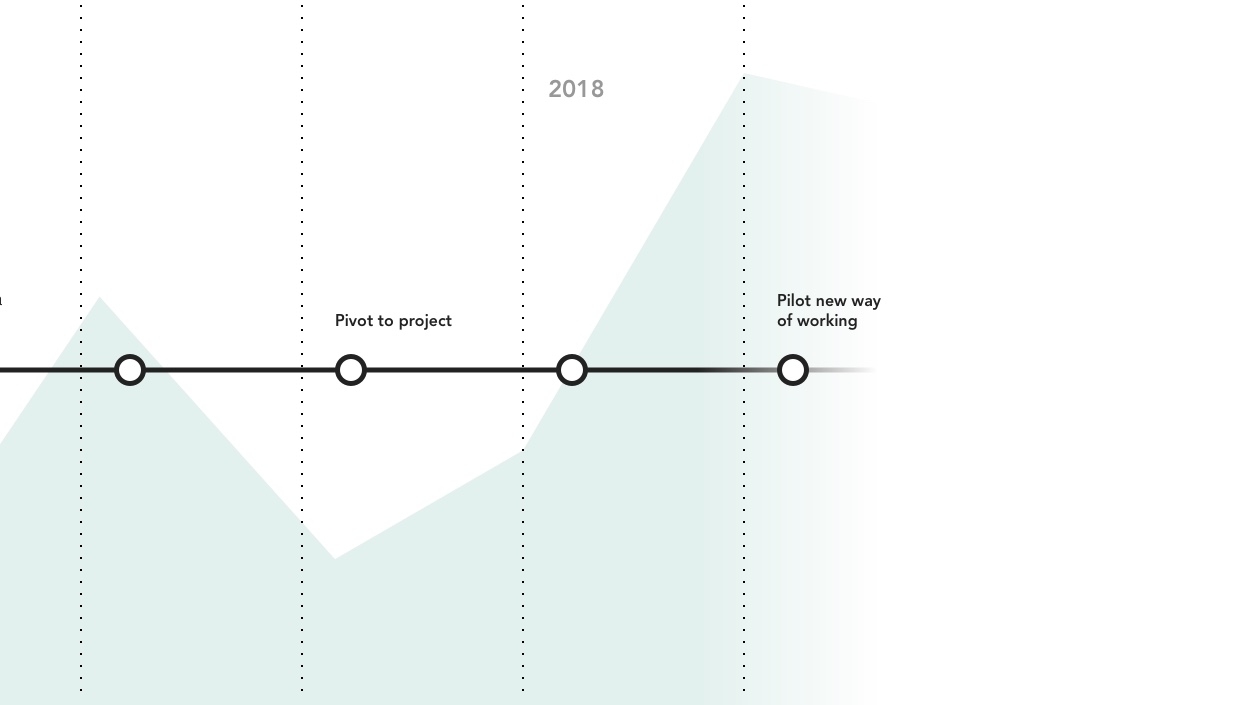
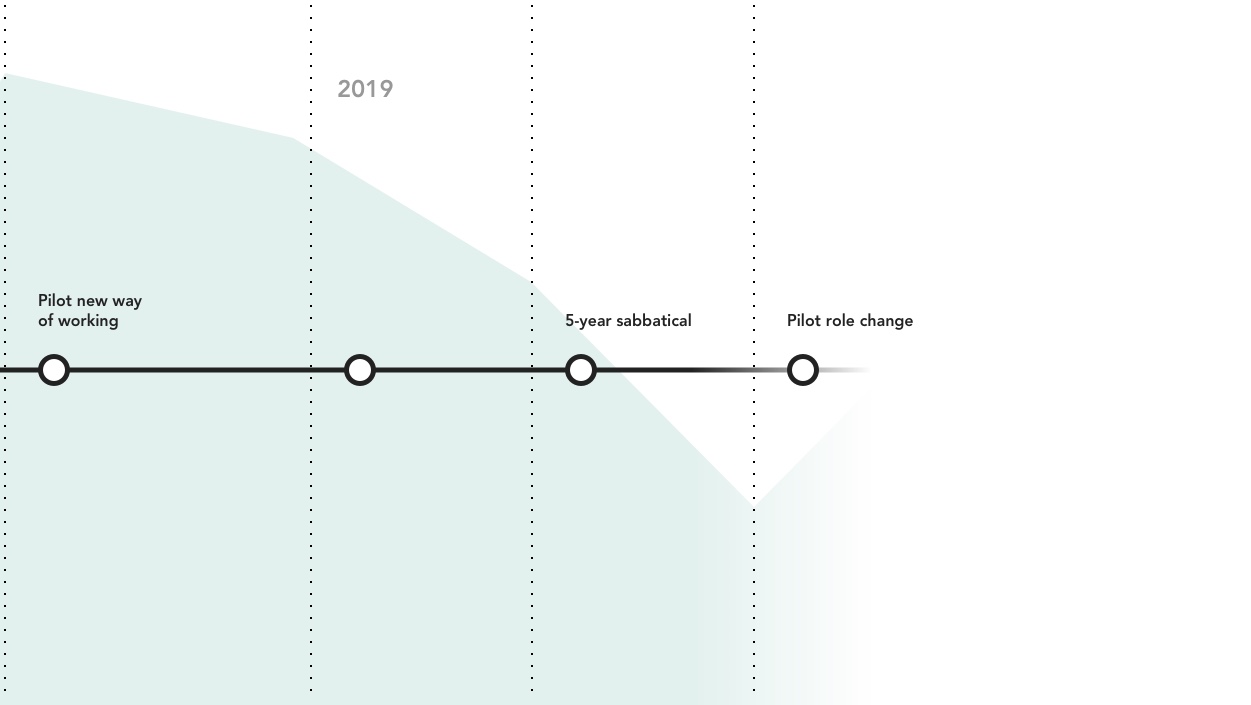
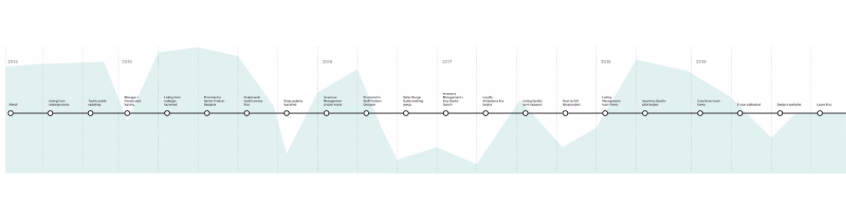
<p>(Yes, I made a journey map of my time at Etsy.)</p>

<h2 id="challenge-get-over-my-fear-of-public-speaking">Challenge: Get over my fear of public speaking</h2>

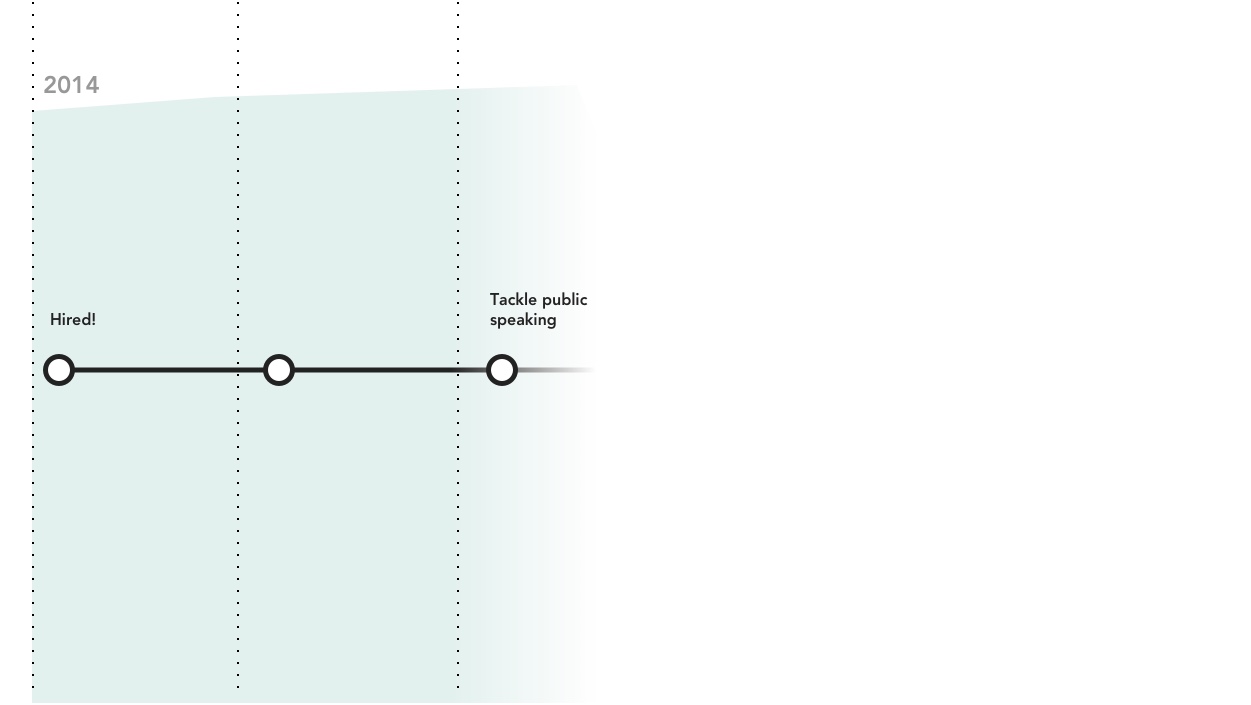
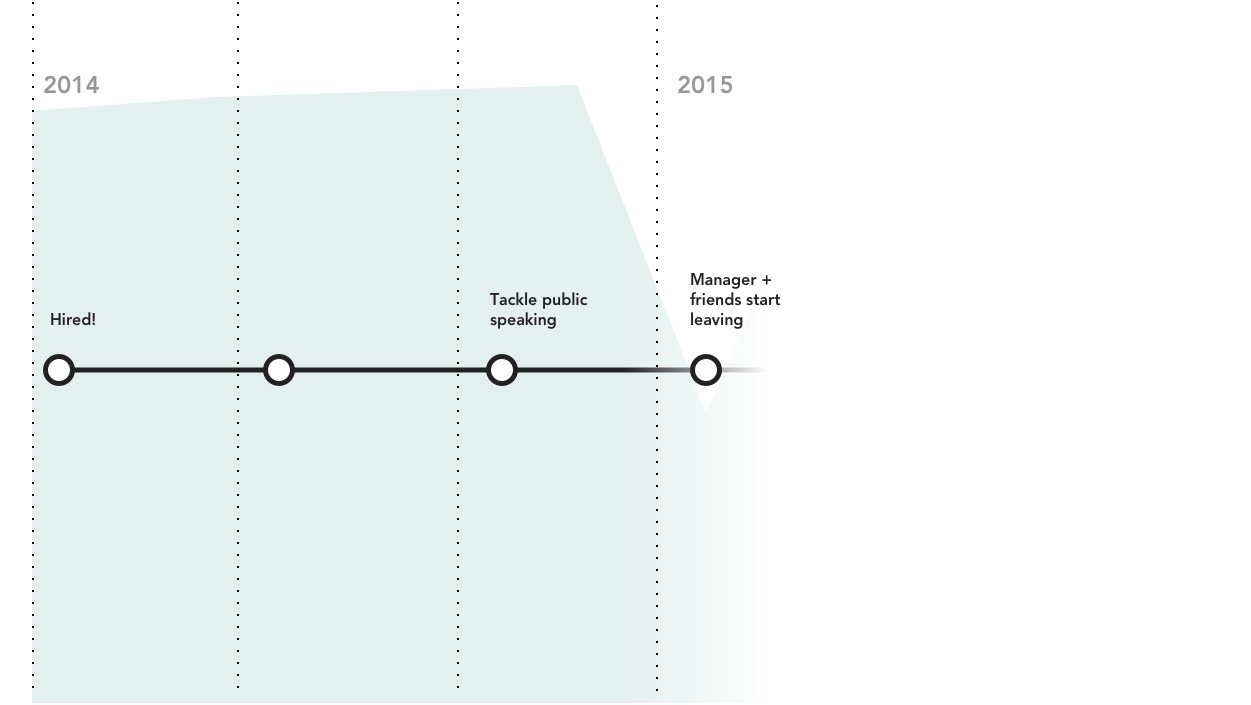
<p>Let’s start with 2014. A few months into working at Etsy and I was learning so much about design. I had all of this energy, and I wanted to share it. It felt like everyone around me was getting into public speaking. I saw designers I admired giving amazing talks. Everyone at Etsy was speaking, too. I loved it. I wanted to be a part of it. But the idea of speaking in front of people on a stage completely terrified me.</p>

<p>So, I decided that it was time to get over my fear of public speaking. My manager, <a href="http://capwatkins.com">Cap</a>, was frequently speaking at conferences, and I told him that I also wanted to get into public speaking. He often found himself with more invitations to speak than he could manage. So whenever an opportunity came along that he couldn’t make, he passed it along to me, helped me prepare for it, and gave me feedback along the way. I went from having no public speaking experience to giving 6 talks in a year.</p>

<p>This was the <strong>good kind of challenging</strong>. I was developing an important skill that I wanted to learn. I had a manager coaching me through the process and a supportive team that listened to my bad drafts and gave critical feedback. Most importantly, I hit a point where it no longer terrified me. It’s how I’m able to stand here right now before you and feel (mostly) calm. I conquered my fear.</p>

<p>This was one of the first examples of sponsorship that I had ever experienced. I identified a skill that I wanted to develop, and put it out into the world by sharing it with my manager. He used his access to find me opportunities to develop this skill, and supported me along the way. I probably could have made it work on my own by submitting proposals and cold-emailing people, but I think that I ended up being so much more successful because my manager supported me.</p>

<div class="jh-text-cms__img jh-text-cms__img--full-width">
  <img src="/uploads/journey-map-02.jpg" />
</div>

<h2 id="challenge-everyone-is-leaving">Challenge: Everyone is leaving</h2>

<p>It’s 2015. I was a year into my job at Etsy. I’d spent it working on a project that I loved with a team that I loved. For the first time at a job, I felt really, deeply supported. Things were going great.</p>

<p>And then, my manager, Cap, quit. Shortly after that, the most senior designer on my team, <a href="http://aaron.mn">Aaron</a>, quit as well.</p>

<p>It felt like such a blow. I was so bummed out. Cap had done so much to teach me about design, and collaboration, and had coached me on my writing and my public speaking. And Aaron had brought me into developing Etsy’s very first design system, the web toolkit, and I had learned so much from him in the process. Not to mention, I really valued and trusted their opinions. If they were leaving Etsy, were things bad? Did they see something I didn’t? Should I leave?</p>

<p>At previous jobs, when people I respected left, I was almost always like, oh shit gotta get out of here! But I was really happy with my job at Etsy, like happy in a way I had never been at a job before. I didn’t want to leave. I honestly had no good reason to leave, other than my own fear of change. So, I made the decision to stay.</p>

<p>And, I quickly learned that a side effect of people leaving is that it gives others the chance to step in and fill the gaps that those people leave behind. With Aaron leaving, I’d have an opportunity to be in more of a leadership role on the web toolkit work. So I decided to go for it, and to fill that gap. I felt ready.</p>

<p>This ended up being the <strong>good kind of challenging</strong>. Before working at Etsy, I was really terrible at dealing with change, so much so that I got feedback in my first annual review about it. I thought that all change was bad and didn’t have the tools or resiliency to deal with uncertainty.</p>

<p>I reflected on this situation a lot in my time here and how it would have been such a shame if I had left after being here for only a year, and how much I would have missed out on. By pushing through something that was hard and dealing with it instead of running away, I also showed myself that I was tougher than I thought.</p>

<div class="jh-text-cms__img jh-text-cms__img--full-width">
  <img src="/uploads/journey-map-03.jpg" />
</div>

<h2 id="challenge-a-completely-unmanageable-workload">Challenge: A completely unmanageable workload</h2>

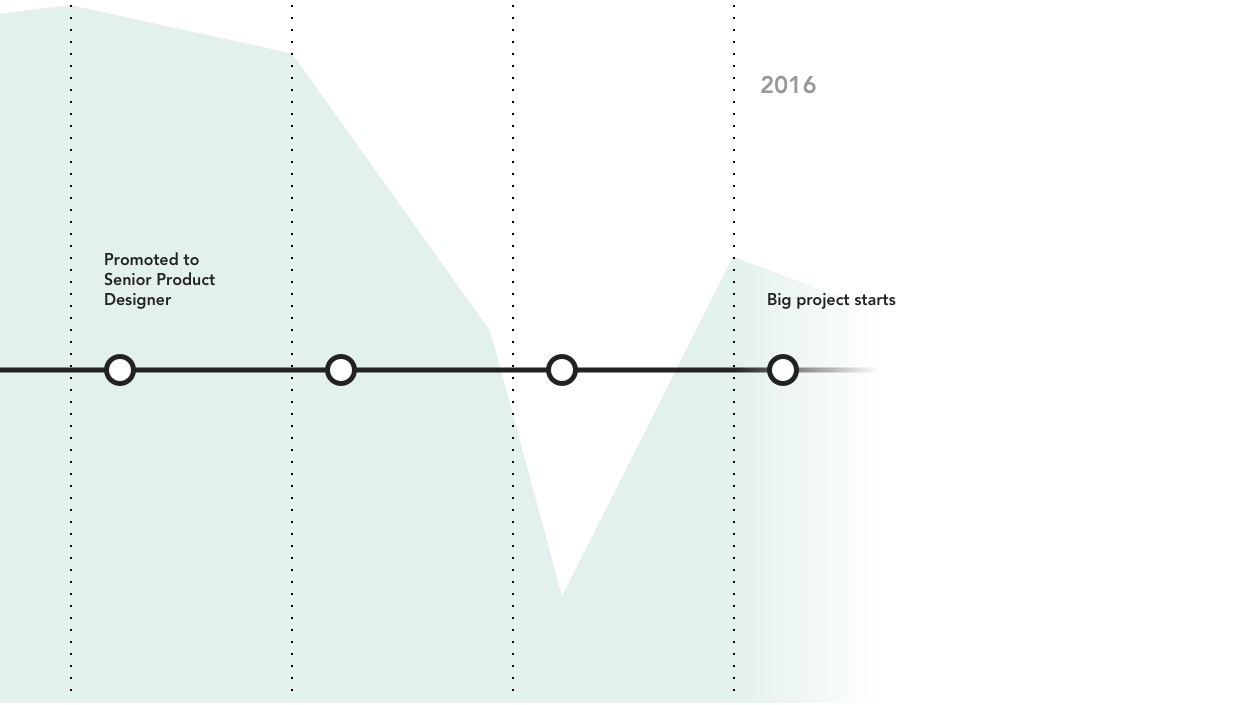
<p>In 2016, my team was working on the hardest and most complex UX problem I had ever encountered (and still probably is, to this day). It was over a year’s worth of work. And it was being timed with another big  launch, so there was extra pressure.</p>

<p>Well, we were so focused on building these tools for the web that at one point we realized that we also needed to do the work in the app so that we didn’t totally break everything when we launched.</p>

<p>To get this work done in time, we quickly spun up another squad of engineers to focus on the functionality for the app. So, I suddenly found myself the only designer for two squads, one designer to 15 engineers, working on the hardest design problem of my life. I very quickly became very overwhelmed. Yet, for some reason, I was so afraid to tell my manager that I was struggling with the workload and quickly burning out.</p>

<p>Why was that? A few reasons:</p>
<ul>
  <li>I remember thinking a lot about my title, senior designer, and that part of being senior was handling increasingly complex work. Well, this was harder than anything I had ever done, so I assumed this must be what being a senior designer was like.</li>
  <li>I like working on complex projects, and I know that I’m good at it. But I was worried about what it would mean about myself if I thought this project was too much work, or too complex.</li>
  <li>Also, I’m really hard on myself. I hold myself to high standards. And I’m bad at asking for help, and even recognizing that I should be asking for help.</li>
</ul>

<p>This was the first time maybe ever where I felt positively incapable of doing the work. Not because I wasn’t skilled enough. But because I didn’t have enough time to do it. It seemed like the only way to execute on the massive amount of work on my plate was to find some way to duplicate myself.</p>

<p>One day, I finally broke down into tears and admitted to my manager, <a href="http://jason-huff.com">Jason</a>, that this project was too much work for me and that I just wasn’t capable of doing it. I had been holding this in for months.</p>

<p>Anything that culminates in a nervous breakdown? <strong>Bad kind of challenging</strong>. Of course, nothing bad happened when I admitted that I couldn’t do it. Jason was like, I’m sorry that you’ve been going through this and felt like you couldn’t speak up about it. Let’s brainstorm ways that we can try and lighten your workload and get you some support. It was such a relief to know that my manager knew I was struggling. I felt like this huge burden that I had been secretly carrying was lifted. And, of course, I didn’t get in trouble for admitting that I couldn’t do something. My senior title wasn’t revoked. But, boy, was it reflected in my yearly review from that time. All of the comments were like, she’s doing a lot of good work but… is she okay?</p>

<blockquote>
  <p><em>“Jessica could focus her development on being more open about her needs and challenges… she is able to execute on a ton of work in high pressure situations… but I think Jessica could better express when she feels like she has too much on her plate… and making it clear with her product and engineering teammates if she needs help.”</em></p>
</blockquote>

<p>Asking for help isn’t admitting weakness. If anything, I’ve learned that it’s a sign of maturity and self-awareness to be able to say that you can’t do something. It’s especially hard when you’re struggling with things that are close to your core identity of who you are. I self-identified as someone who was good at complex projects and was really good at managing my time. Struggling with this project didn’t make those things less true.</p>

<p>One good outcome of this was that I became more comfortable giving feedback on project scope and setting boundaries for what I can and can’t work on. When we were staffing the next round of projects, I helped Jason understand which projects needed one designer and which were too big for just one person. I helped call out areas where scope might creep and where we’d need more explicit support.</p>

<div class="jh-text-cms__img jh-text-cms__img--full-width">
  <img src="/uploads/journey-map-04.jpg" />
</div>

<h2 id="challenge-a-totally-dysfunctional-working-group">Challenge: A totally dysfunctional working group</h2>

<p>Toward the end of 2016, my manager put me on a working group that was a mix of 5 or 6 staff designers and design managers: the most senior people on the design team. Our goal was to assess all of the disparate patterns being used across the experience and align on which patterns we felt should be used. It was a great mix of a few things that I love: design systems, documentation, and working groups.</p>

<p>A few meetings in, and I quickly recognized a couple of things that weren’t working. First, there was no one person in charge. We were all really senior, but without clear expectations for our roles, we were each sort of doing our best to lead and make decisions simultaneously. As you can imagine, we ended up arguing with each other a lot and making very little progress. Because the roles weren’t clear, there were a few managers doing IC work for the working group, which created even more confusion about how we were supposed to be working and what our roles were. On top of all of this, I was the only woman in the group, and that started to exhaust me over time.</p>

<p>Slowly but surely, this work completely drained me. On paper, it was right up my alley and something I loved doing. But the working group itself was completely dysfunctional. It got to the point where I would have to focus all of my energy on not crying during the meetings; I was constantly on the verge of tears.</p>

<p>I remember reaching out to <a href="http://danielespeset.com">Daniel</a>, a staff engineer whom I really admired, and asking him, if you’re IC4 (staff), are you allowed to quit things? Are you allowed to just be like, I don’t want to do this?</p>

<p>I don’t give up on things easily, but I was so sick of crying and feeling anxious all the time. I finally went to my manager and was like, I’m sorry, this is not like me, but I need to quit this working group. I know you asked me specifically to join this group, but please, just take me off of it.</p>

<p>This was definitely the <strong>bad kind of challenging</strong>. Jason asked me to outline all of the issues I was seeing with the working group so he could address them. We went through each issue point by point, and to his credit, he fixed every single one of them. He totally rebooted the group, asked me to continue participating, and the reboot ended up being much more effective.</p>

<p>I ended up turning the list I made of everything going wrong with the group into <a href="https://medium.com/etsy-design/crafting-an-effective-working-group-da77bded3aaf">a post on the Etsy Medium blog about the elements of an effective working group</a>. The whole situation sucked, but I have a much stronger opinion on how to effectively work as a group: a clear facilitator. A clear, measurable goal. Clear roles.</p>

<div class="jh-text-cms__img jh-text-cms__img--full-width">
  <img src="/uploads/2017-06-24-15.47.14-2.jpg" />
</div>

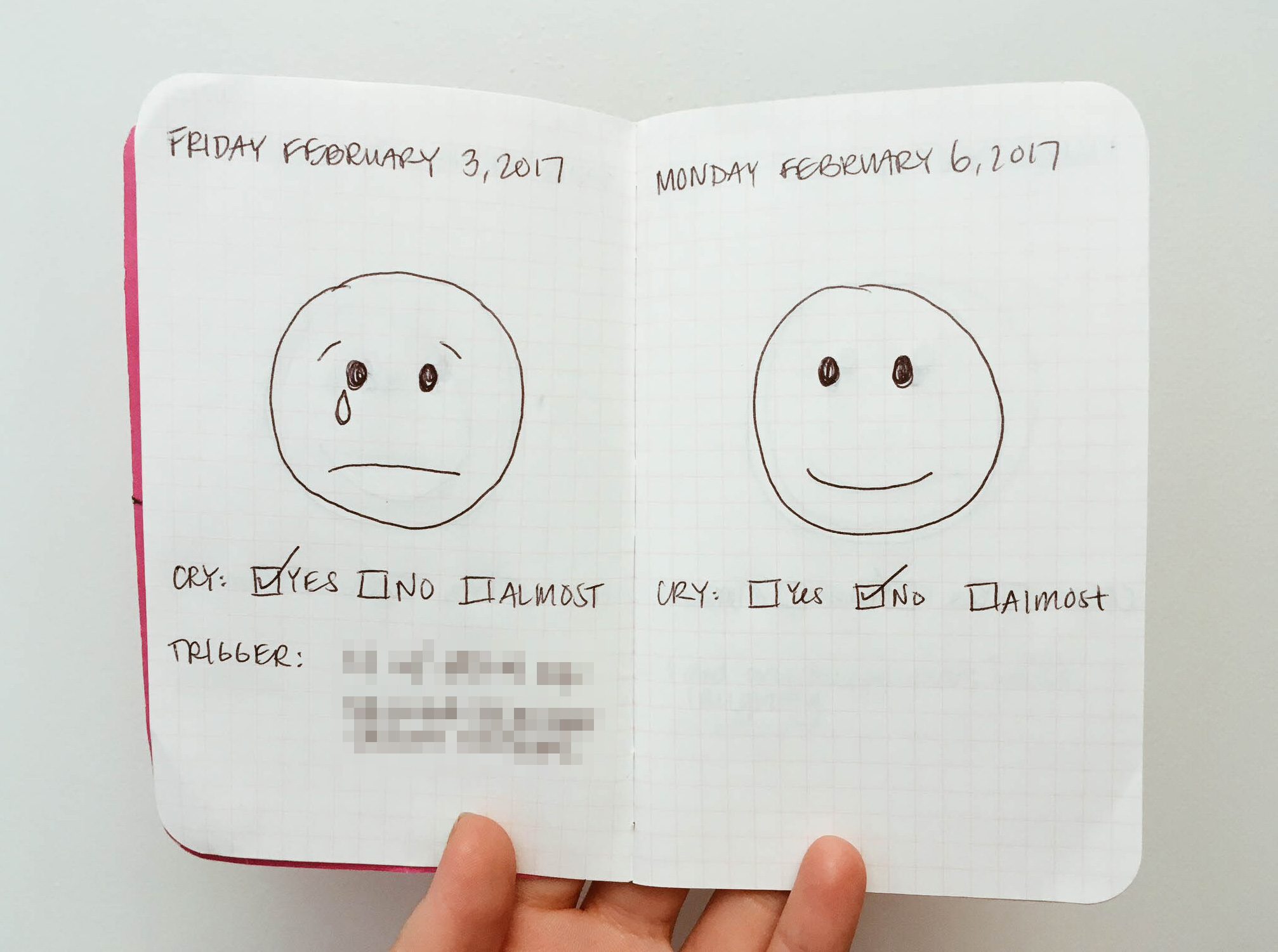
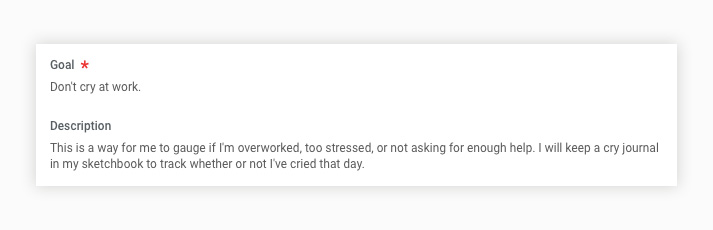
<p>This is the situation that ultimately sparked my crying journal. I was crying so often that I started a journal to keep track of whether I cried each day, and if I did, what the trigger was. Tracking this helped me unpack my feelings around what was frustrating me and why. I also wrote <a href="http://jessicaharllee.com/notes/crying/">a blog post on my personal website about the experience of crying at work</a> and shared it broadly. Three years later, people still tell me that it made them feel more comfortable with their own emotions.</p>

<p>Again, this ended up being a bad situation for me. It sucked to go through. But boy, did I learn a lot…</p>

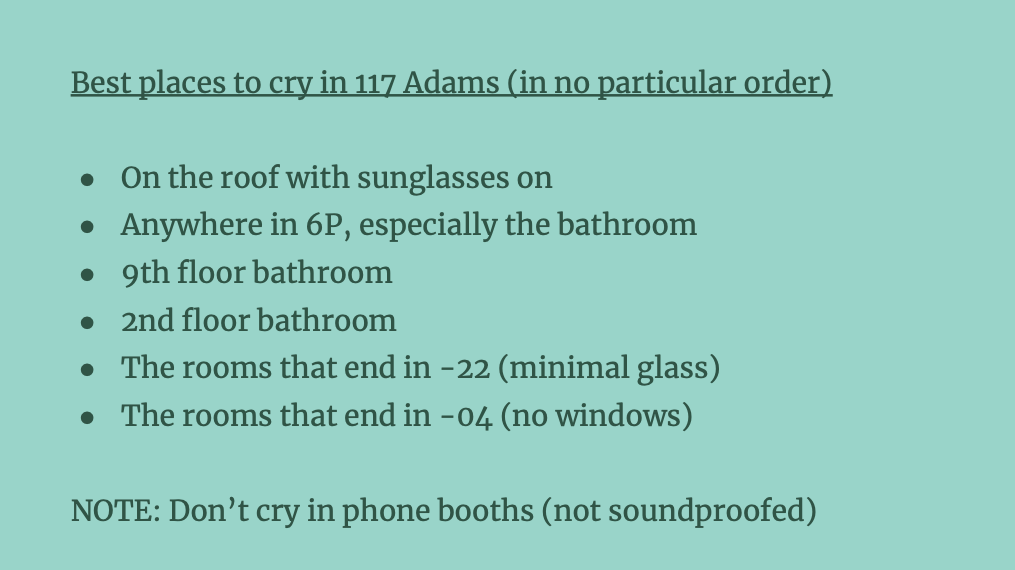
<div class="jh-text-cms__img jh-text-cms__img--full-width">
  <img src="/uploads/best-places-to-cry-in-117-adams.png" />
</div>

<p>… including learning the best (and worst) rooms to cry while you’re in the office.</p>

<div class="jh-text-cms__img jh-text-cms__img--full-width">
  <img src="/uploads/journey-map-05.jpg" />
</div>

<h2 id="challenge-pivot-to-a-project-im-not-invested-in">Challenge: Pivot to a project I’m not invested in</h2>

<p>In 2017, I was working on a project that I really believed in, so much so that I had originally advocated for my team to work on it. But then the pre-holiday panic started to set in, and my team was told to switch projects to something different. I was heartbroken.</p>

<p>We were told to build an end-to-end feature that would require our team to work on the buyer side. In my 3.5 years at Etsy, I had barely touched anything on the buyer side.</p>

<p>I spent the first week of the project feeling grumpy. Like, really grumpy. I thought about leaving. But then at some point, I realized that I had zero control over the situation. There was a tight deadline; we had to ship everything before the holidays, so it would be a quick project with an end in sight. I decided to just power through it.</p>

<p>Well, the more we dug into the work, the more I became interested in it. The feature was going to affect numerous flows and features across Etsy. I had to think through what we wanted to show people on the buyer side, and what kind of information we needed to collect from sellers to make that possible. It was my first time really thinking about Etsy as an intricate system, where one thing over here affects something else over there. I spent a ton of time talking to other designers and asking for their advice on how to approach the work. I had no idea how to run experiments or how to think about the many different states of the checkout flow. But there were a ton of people around me who did, so I focused my energy on learning as much as I could from them.</p>

<p>To my surprise, this project ended up being the <strong>good kind of challenging</strong>. I learned so much. And I felt really good about our execution of the work.</p>

<p>Looking back, it gave me the experience that I needed to have more of an impact at Etsy. Teams had been really siloed between buyer and seller at the time, so it was rare to have the chance to own an end-to-end experience. I went from being somebody that was an expert on building seller-facing features to someone who could think across the buyer and the seller experiences.</p>

<p>It also helped me form a stronger opinion on the best way to structure teams at Etsy. Thinking about a feature holistically, instead of just about the buyer-facing work or the seller-facing work, wasn’t just rewarding. It led to higher quality work.</p>

<p>Ultimately, as you might know, the project was not successful. Not enough buyers or sellers wanted the feature, so it wasn’t really impactful. But! Some of the most powerful stories and learning opportunities can come from failure. Months later, I was able to turn this project into a story for others to learn from; I presented about this project at the Operating Team offsite, which was a really cool opportunity.</p>

<p>Overall, I’m really glad that I worked on this project; I ended up getting so much out of it.</p>

<div class="jh-text-cms__img jh-text-cms__img--full-width">
  <img src="/uploads/journey-map-06.jpg" />
</div>

<h2 id="challenge-try-a-totally-different-way-of-working">Challenge: Try a totally different way of working</h2>

<p>In early 2018, we kicked off new work on our team. At the time, I remember feeling a little bored, and a little lost. While I was glad the previous project was over, I was also coming down off the high of learning something completely new. I was back to working on listings, and while I loved that work, I also remember wondering if I had learned all that I could learn at Etsy.</p>

<p>Well, a few months later, our team was told to switch focus to a new track of work. And not only were we going to deliver product changes with this new track of work, we were simultaneously going to pilot a completely different process for building products at Etsy.</p>

<p>It was really, really hard at first. One week, I was feeling super confident as a staff designer, and like I had learned all that I could learn. The next week, I felt like I had no idea how to do my job. I had been following the same process, more or less, for years. I had gotten really good at it. But now, there were times when I was just not sure what my role as a designer was supposed to be. It was so jarring. And that feeling lasted for a solid six weeks.</p>

<p>But then at some point it clicked. And wow, it changed my entire outlook on how to do my job. And what the role of design is. I don’t know how to describe the feeling, other than it’s like being nearsighted and being able to see the things right in front of you, but then you put on glasses and suddenly the things that are in the distance come into focus, too. And you realize that there was this whole part of the world around you that you were just not looking at or thinking about.</p>

<p>This was definitely the <strong>good kind of challenging</strong>. I think this work is one of my favorite examples of something that ended up being the good kind of challenging, but it wasn’t always clear that’s where things were going to go.</p>

<p>It felt really hard, but we also had a lot of agency over the way we operated. It also felt really stretchy. I had to get used to the feeling of not knowing the answer. It was super humbling. Once I became comfortable with not knowing, I spent a lot of time asking questions, reading articles, and talking with my teammates about what was working and what wasn’t.</p>

<p>We also weren’t held to a GMS goal. Our entire focus for the first few months was on learning and developing this process. So we felt safe trying things that were a little bolder, and we felt safe failing. Every day, our team was coming up against things that we didn’t know how to do, but we felt like we were able to problem solve and figure it out.</p>

<p>I think it’s also funny to look back and think about how naive I was to think that I had learned all I could learn about process. It really makes me excited to think about what I still don’t know.</p>

<div class="jh-text-cms__img jh-text-cms__img--full-width">
  <img src="/uploads/journey-map-07.jpg" />
</div>

<h2 id="challenge-try-a-totally-different-role">Challenge: Try a totally different role</h2>

<p>This is all pretty fresh, so even though I’m still sorting through all of this, here’s my best attempt at zooming out and reflecting. At the end of 2018, <a href="http://ezorzi.squarespace.com">Eleonora</a> proposed an idea for a new role for staff designers at Etsy, called Design Lead. Normally, the design manager is accountable for the quality of the work of their reports. This new role would shift the accountability to the design lead. The advantage of having a design lead is that, because they’re ICs, they’re closer to the work and would be able to give higher quality feedback. Her plan was to pilot this role for the apps team for six months.</p>

<p>One thing that we talk about a lot in the staff design group is what career growth looks like for higher level ICs that don’t want to become managers. It’s not very well defined, and part of that might be because there aren’t a lot of examples out there that we can point to for guidance. I was looking for more responsibility, but as an IC, I didn’t know what that could look like. I felt like I could have a larger impact than I was having, but wasn’t sure what that could mean as somebody who didn’t want to be a manager and who still wanted to design.</p>

<p>When I heard about Eleonora’s role proposal, it sounded like exactly what I was looking for. So I asked to pilot this role for six months as well, with a few modifications. One key difference between our proposed roles was that El was going to be working across all of the app squads, and I still wanted to stay embedded on a product squad while performing design lead responsibilities.</p>

<p>Two weeks after my new role started, I went on sabbatical, which was pretty unfortunate timing. The last week of my sabbatical, I was so nervous about coming back that I cut off all of my hair in an attempt to at least look like someone who was confident. (Yeah… real talk.) When I came back, I spent the next few months struggling like I’ve never struggled before, and it was really hard to untangle why.</p>

<p>A lot happened while I was out, and I needed to quickly get caught up on all of the work so I could start giving feedback and making recommendations. I felt like I was constantly running around and reacting to things, instead of having the space to be proactive. There were a lot of new skills that this role required that I just didn’t have practice doing. I’m used to directly solving problems, instead of focusing on enabling others to solve their own problems. I found it really hard to measure the impact I was having. Plus, I had my own design work to take care of, which I <em>loved</em> doing, but I was struggling to give it the attention that it deserved.</p>

<p>I couldn’t tell if I was overwhelmed because of sabbatical, because of the new role, or both.
I started recognizing some of the warning signs from past experiences: a workload that was only possible if I came in early and left late. Unclear roles and expectations. Crying in 1:1s. And the feeling of being stretched so thin that I started to feel like I was failing at everything.</p>

<p>This was the <strong>bad kind of challenging</strong>. But confusing, because this was a role that I really wanted to take on, and I was afraid of what it would mean about my career opportunities if I admitted that things weren’t working.</p>

<p>One amazing decision that my manager and I made was that I should get a professional coach, which is basically like going to work therapy. I had originally planned to ask the coach for advice on leadership and building influence. Instead, when I showed up to our first meeting, I was like, “I need your help figuring out if this role is even right for me.” We talked for an hour, and at the very end, she was like, look. It sounds like you’re trying to do two jobs at once. And you’re not set up for success.</p>

<p>I started crying. I felt so heard. And like it was okay that I was struggling, and that it wasn’t my fault. I had been so hard on myself. It helped me realize that if I wanted to make this role work, I’d have to seriously adjust the scope of the role, or give up my day-to-day design work. I wasn’t interested in giving up design work. But after a few attempts at adjusting the scope of the role, I decided that this was just not the right situation for me to be piloting design lead.</p>

<p>As you now know, I hate saying no and admitting that I can’t do something. But I felt really at peace with finally admitting to my manager that I didn’t want to do this role anymore, and I wanted to go back to just doing my regular ol’ design work.</p>

<p>We had a retro at the six month mark, focused on identifying the situations in which design lead makes sense and when it doesn’t. It actually ended up being a really interesting experiment having me and El try out two different iterations of the role. Because of this, I think we ended up having a better understanding of how we might ensure that future design leads are set up for success.</p>

<div class="jh-text-cms__img jh-text-cms__img--full-width">
  <img src="/uploads/my-etsy-journey-map-009822.png" />
</div>

<p>Here’s the full journey map! Pretty wild.</p>

<hr />

<p>Ok, so reflecting back on all of these examples, what are some things that they had in common?</p>

<p><strong>Good kind of challenging:</strong></p>
<ul>
  <li>It’s not easy, but it’s not terrible</li>
  <li>The learning that I’m doing aligns with my goals</li>
  <li>I feel supported and safe</li>
  <li>I have a certain amount of control over the situation</li>
  <li>I come out the other side grateful for the opportunity</li>
</ul>

<p><strong>Bad kind of challenging:</strong></p>
<ul>
  <li>I feel stressed, overwhelmed, and anxious</li>
  <li>I’m not set up to succeed</li>
  <li>A lot feels like it’s out of my control</li>
  <li>Everything builds up to a breaking point</li>
  <li>I’m just grateful that I made it out of that situation</li>
</ul>

<p>The confusing thing about a bad situation is that I’m still learning. It’s not as simple as, am I learning, or am I not learning? You can see how in some bad cases, I was able to really make the most of the situation. And after the fact, I’ve always learned something. But the process for getting to that point doesn’t usually end up worth it.</p>

<p>Beyond becoming really self aware, how can you learn to identify these situations sooner? Here are some concepts, tools, and frameworks that I’ve found to be helpful when reflecting on whether challenges are good and bad.</p>

<h2 id="identify-gravity-problems">Identify gravity problems</h2>

<p>For the past few months, I’ve been in a book club with <a href="http://www.kristenleach.com">Kristen</a> and <a href="http://madebyeno.com">Erin</a>. We’ve been reading this book, <a href="https://designingyour.life">Designing Your Life</a>, which is all about using the design process to create the life that you want to live. There’s a ton of activities, and it’s totally cheesy but great.</p>

<blockquote>
  <p><em>“You can’t change gravity… Just accept it. When you accept it, you’re free to work around that situation and find something that is actionable.” – Designing Your Life</em></p>
</blockquote>

<p>In the book, they talk about this concept called a “gravity problem”. Gravity problems are things that you just can’t change. They’re out of your control. They’re a circumstance, not something you can act on. You either need to accept it and embrace it, like I ended up doing in the case of [the buyer-facing project], and when my friends started leaving. Or you need to realize that there is nothing that you can do, like in the case of [the project that was too much work]. I couldn’t duplicate myself. And the timeline was not going to change. So I needed to adjust my expectations and find a different way to solve the problem, instead of hoping that more time was going to appear out of thin air.</p>

<p>As the book says, an important part of the design process is reframing the problem, and only then can you truly develop multiple solutions to whatever you’re facing.</p>

<h2 id="identify-whats-energizing-and-whats-draining">Identify what’s energizing, and what’s draining</h2>

<p>One important factor in a good challenge is whether the things that you’re learning are aligned with your goals and interests. This can require a ton of self-awareness, which can be really hard to have in the midst of a challenge.</p>

<div class="jh-text-cms__img jh-text-cms__img--full-width">
  <img src="/uploads/strengths-profile.png" />
</div>

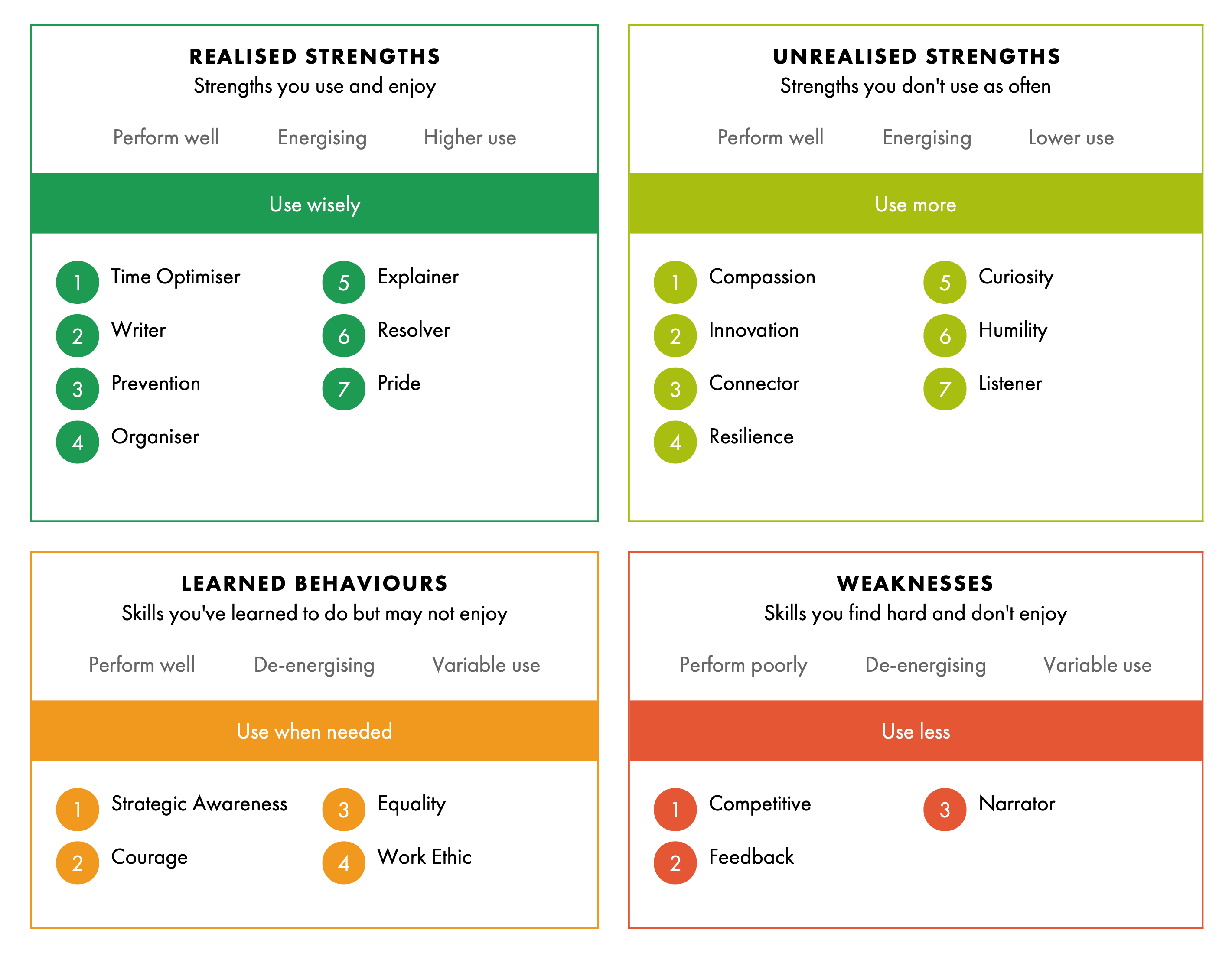
<p>There’s a strengths test called <a href="https://strengthsprofile.com">Strengths Profile</a> that all of the staff designers and design managers did at the beginning of the year. This one’s mine. According to Strengths Profile, there are things that energize you, which are the top two boxes here, and things that drain you, the bottom two boxes. I’ve done similar tests before, but what I really love about this test is that they aren’t afraid to acknowledge weaknesses. This framework says that instead of focusing on our weaknesses, we should spend our time on the things that energize us, and learn to maximize them, and even use them to work around our weaknesses. I love that it gives people permission not to focus on the things that are draining, and also acknowledges that everyone has things they aren’t good at, and that’s okay.</p>

<div class="jh-text-cms__img jh-text-cms__img--full-width">
  <img src="/uploads/designing-your-life-example.png" />
</div>

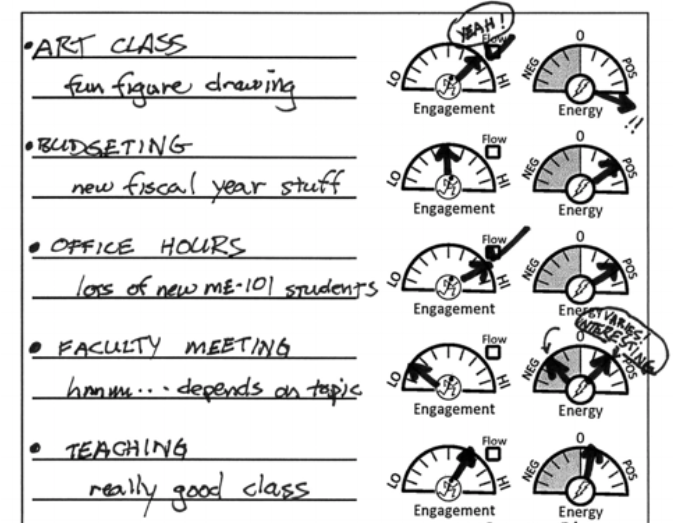
<p>I also love journaling as a way to identify patterns and unpack your feelings. In Designing Your Life, we tracked our day-to-day activities, how energizing or engaging they were, and whether we entered into a flow state. This is a sample from the book. While I was doing the design lead pilot, it helped me realize how I was spending my time, and that the things I found most energizing weren’t my design lead responsibilities. It reinforced that I still really loved day-to-day design work, and that I shouldn’t give it up.</p>

<h2 id="reflect-on-whether-youre-set-up-for-success">Reflect on whether you’re set up for success</h2>

<p>Sometimes, there is no way in which you were going to succeed at whatever you were trying to do. The reality is that sometimes these things are completely out of your control. I’ve found the concept of “being set up for success” extremely helpful, not only for my personal challenges, but also in thinking about the success or failure of projects that I’ve been on.</p>

<p>If you’re set up for success, you have all of the support and structure in place to do your job well and to succeed. But the impact of those things not being there can be detrimental. As someone who tends to blame myself, or put unreasonable pressure on myself, it can be really hard to recognize whether I’m set up for success on my own. This is where I’ve found talking to a trusted group of friends, or an unbiased third party like a coach, to be really really helpful.</p>

<p>I read a lot of management books because a lot of the skills needed are actually really similar to the skills that senior ICs need as well. <a href="http://larahogan.me">Lara Hogan</a>, former Etsy engineering director, has this concept of a “<a href="https://larahogan.me/blog/manager-voltron/">manager voltron</a>” which, to me, doesn’t need to just apply to managers. The idea is that you can’t expect to get everything you need out of one person, and so you should be building a trusted network of advisors that can help you work through different kinds of situations.</p>

<p>Eleonora and I had biweekly one-on-ones as we were going through the design lead pilot so we could compare notes and give each other advice as peers. I don’t think I would have had my ah-ha moment about design lead not working out without the input of a coach. When I was struggling with the working group, I reached out to Daniel, who was in a different org than I was but at a similar level, to help understand expectations for my role. And I’m constantly talking to Erin about all kinds of problems that I’m having.</p>

<h2 id="practice-saying-no">Practice saying no</h2>

<p>One of the hardest skills that I’ve had to develop is the ability to say no. I want to spend my time in the good kinds of challenges, and avoiding the bad ones. The bad ones are not worth it.</p>

<p>At first, not only was I afraid of saying no, I wasn’t sure if I was allowed to. Which sounds ridiculous, but this is how my brain works. Practicing saying no to smaller things, like participating in a working group, made it easier for me when it came time to saying no to things that felt higher stakes, like taking on a different role.</p>

<h2 id="find-or-ask-for-sponsorship">Find or ask for sponsorship</h2>

<p>Finally, we can’t talk about challenges and growth without also talking about <a href="https://larahogan.me/blog/what-sponsorship-looks-like/">sponsorship</a>.</p>

<p>Managers, the best thing that you can do for your reports is sponsor them. Recommend them for opportunities that will push them and stretch them. Because you’re managers, you have access to opportunities and information throughout the company that ICs just don’t have access to. We can try and weasel our way into stuff, but at some point, because of the nature of an org structure, we hit a ceiling.</p>

<p>I was lucky enough to have many, many opportunities for growth here at Etsy, and most of them were because I had a manager who recommended me for that opportunity. Those managers made it their mission to help me grow and develop skills. And sometimes, when those opportunities pushed me beyond my limits, they made it their mission to help me work through those challenges. I cannot emphasize enough that in addition to finding your reports these opportunities, you also need to make sure that you’re supporting them throughout, and that they know that you’re supporting them.</p>

<hr />

<p>My time at Etsy has been full of good challenges and bad challenges. At times it’s been really hard, but it’s been so, so rewarding. I’ve learned so much. Thank you for letting me learn and grow in such a safe and supportive environment.</p>

<div class="jh-text-cms__img jh-text-cms__img--full-width">
  <img src="/uploads/harllee-sweat-smile-zoom.gif" />
</div>

<p>So, speaking of challenges, it’s time for me to dig into a new challenge, a new set of problems, and to push myself to really grow. I’m hoping that leaving Etsy will be the good kind of challenging for me. But, it’s time for me to take my own advice: I can’t know unless I try.</p>

<p>Thank you.</p>]]></content><author><name></name></author><category term="personal" /><category term="reflections" /><category term="etsy" /><category term="lessons learned" /><summary type="html"><![CDATA[My Last Lecture at Etsy where I reflect on different challenges I encountered, and determining whether they were the "good" or "bad" kind of challenging.]]></summary></entry><entry><title type="html">Inside Design interview with InVision</title><link href="http://www.jessicaharllee.com/notes/inside-design-interview-with-invision/" rel="alternate" type="text/html" title="Inside Design interview with InVision" /><published>2017-11-20T20:20:00-05:00</published><updated>2017-11-20T20:20:00-05:00</updated><id>http://www.jessicaharllee.com/notes/inside-design-interview-with-invision</id><content type="html" xml:base="http://www.jessicaharllee.com/notes/inside-design-interview-with-invision/"><![CDATA[<p><a href="http://cattsmall.com">Catt Small</a> and I recently did an interview with <a href="https://www.invisionapp.com/blog">InVision</a> for their interview series Inside Design. We spoke about what it was like designing for Etsy’s buyers and sellers and our design team culture. We also had a super fun photoshoot slash brainstorming session with our design teammates in Brooklyn Bridge Park!</p>

<p><a href="https://www.invisionapp.com/blog/inside-design-etsy/">Read the interview here</a></p>

<p><img src="/uploads/etsy-32.jpg" alt="etsy-32.jpg" /></p>]]></content><author><name></name></author><category term="etsy" /><category term="design" /><category term="irl" /><category term="process" /><summary type="html"><![CDATA[Catt Small and I recently did an interview with InVision for their interview series Inside Design. We spoke about what it was like designing for Etsy’s buyers and sellers and our design team culture. We also had a super fun photoshoot slash brainstorming session with our design teammates in Brooklyn Bridge Park!]]></summary></entry><entry><title type="html">Starting every day at zero</title><link href="http://www.jessicaharllee.com/notes/starting-every-day-at-zero/" rel="alternate" type="text/html" title="Starting every day at zero" /><published>2017-09-03T08:11:00-04:00</published><updated>2017-09-03T08:11:00-04:00</updated><id>http://www.jessicaharllee.com/notes/starting-every-day-at-zero</id><content type="html" xml:base="http://www.jessicaharllee.com/notes/starting-every-day-at-zero/"><![CDATA[<p>At my very first job, every employee had to take the <a href="http://strengths.gallup.com/default.aspx">Strengthsfinder quiz</a>. The quiz is a series of statements that you agree or disagree with, and at the end of the quiz you get a list of your top 5 strengths. The idea is that by identifying your strengths, it sets you up to maximize them at work. At the top of my list was Achiever.</p>

<p>I remember reading the description of Achiever and having an ah-ha moment; it perfectly described the way I operated. Achievers are known for how much they get done. They’re motivated by crossing things off their to-do lists. The thing that makes us Achievers who we are is also our biggest source of pain: every day starts at zero, and then we judge ourselves based on the number of things we accomplish that day. No matter how productive we were the day before, in the morning the leaderboard resets to zero. Every single day. Over and over and over.</p>

<p>On days when I get a lot done, my Achiever is satisfied. I feel invincible. But a lot of the time, how much I achieve in a day is out of my control. And when I don’t achieve however much I tell myself I need to achieve, I feel horrible. The doubt and self-loathing kick in. All of the energy that I would have spent on achieving gets redirected toward being hard on myself. Zero days are really tough. And when zero days stretch into weeks, it’s incredibly difficult.</p>

<p>There was a period of time when I was in a series of zero weeks. I wasn’t feeling motivated by what I was doing at work and struggled with making progress on my projects. At the end of the day when I’d do my mental assessment of how much I had achieved, I didn’t feel like I had much to show. My job wasn’t creatively fulfilling, and it was putting me in a real funk.</p>

<p>A really common outlet for designers looking to supplement their day jobs is turning to freelance or side projects. Not getting enough app experience at work? Design an app on the side. Not getting to own the product vision enough? Do some freelance product work for a friend. At the time, the design community was talking nonstop about the importance of side projects. When I looked around at my peers, they seemed to be filling all of their waking hours with design. So I tried that, too, thinking that if I could just work on these design projects on the side, then my Achiever would be happy and I wouldn’t feel so worthless.</p>

<p>For awhile, my new schedule went something like this: I sat at a computer at work for 9 hours, clicking away. I’d come home, eat delivery for dinner, and spend the rest of the night in Photoshop or building a website because I told myself that’s what I was supposed to be doing. I went to sleep late, and when I woke up I’d do the same thing all over again. At first, I felt like what I thought a “real” designer should feel like. I was sleeping, dreaming, breathing design. My Achiever was thrilled. But after months of freelance and side projects and websites filling my to-do lists, I was exhausted. I felt completely one-dimensional. I needed to redefine for myself what it meant to keep my Achiever happy.</p>

<p>What’s the opposite of being on a computer all day long? For me, it was making something with my hands. When I was a kid I had dozens of hobbies, most of which involved crafting. I needed a new outlet that had nothing to do with my job or being on a computer. I decided to try embroidery for the first time since I was a kid, since it seemed to be making a bit of a comeback thanks to places like Etsy. I bought a book, went to a craft store to gather supplies, and spent my nights teaching myself how to embroider instead of sitting in front of a screen. Hitting small milestones, like learning a new stitch, was such a thrill. I felt like a beginner again; everything was new and exciting.</p>

<p>Picking up embroidery was an enormous turning point for me. Developing an interest outside of my profession proved to be more than just an outlet for whatever I was going through at work. It also “counted” as achieving something. Instead of only considering things achievements if they resulted in professional development, I realized that I was getting the same sense of satisfaction from making something just for fun, trying out something new, and even failing. I didn’t need to fill my time with design work to make my inner Achiever happy; I needed a hobby.</p>

<p>Once I picked up embroidery, it didn’t stop there. I learned how to weave, knit, and sew. I got into yoga. I signed up for a 10k (a distance which I had never run before) and scared myself into training every day. Then, I signed up for a half marathon. I took classes on pom pom making, Thai cooking, paper marbling, financial planning, candle making, and knife skills. I learned to cook non-dairy versions of foods I love. And I dabbled a bit in writing.</p>

<p>In some ways, being productive outside of work made me more productive at work. My mind got a break from solving the same kinds of problems over and over and was challenged by new problems (how do you develop a training schedule for a race? what’s the best way to cook salmon? how do you make a woven bracelet?). When you’re learning a new skill, you’re not holding yourself to the same standards. You get to be bad at something and make mistakes. And you remember what it’s like to be a beginner.</p>

<p>I also learned to stop judging myself solely based on how much I achieved at work. What I make at work is only one measure of the things that I’ve accomplished in a day, and only one measure of myself as a person. Some days it’s an uphill battle just to go for a run or spend an hour embroidering at night, and when I’m able to make space for those things I feel a real sense of accomplishment.</p>

<p>These days, my life feels much more balanced. When I go through low points at work, I’m able to stay happy and motivated by the other interests I have outside of my job. I like being a professional designer for 8 hours a day, and then being a runner or a textile artist or an amateur chef for the other hours. I can’t change the fact that I’m an Achiever, but I can have a healthier idea of what zero means.</p>

<p><em>Originally published in <a href="https://superyesmore.com/starting-every-day-at-zero-6666a0b5027ff6cd53a44b9ff4655b3f">The Human in the Machine</a></em></p>]]></content><author><name></name></author><category term="personal" /><category term="reflections" /><category term="embroidery" /><category term="lessons learned" /><summary type="html"><![CDATA[At my very first job, every employee had to take the Strengthsfinder quiz. The quiz is a series of statements that you agree or disagree with, and at the end of the quiz you get a list of your top 5 strengths. The idea is that by identifying your strengths, it sets you up to maximize them at work. At the top of my list was Achiever.]]></summary></entry><entry><title type="html">Crying</title><link href="http://www.jessicaharllee.com/notes/crying/" rel="alternate" type="text/html" title="Crying" /><published>2017-06-25T16:00:00-04:00</published><updated>2017-06-25T16:00:00-04:00</updated><id>http://www.jessicaharllee.com/notes/crying</id><content type="html" xml:base="http://www.jessicaharllee.com/notes/crying/"><![CDATA[<p>I cry pretty easily. Crying is emotional relief for me and is usually a sign of stress or feeling overwhelmed. It’s not always a bad thing, either; I cry at commercials, at weddings, while watching Grey’s. But usually if I’m crying, it’s because of some kind of intense emotion.</p>

<p>The past year was pretty tough on me at work. I was working on a project that I loved, but it was incredibly complex and overwhelming at times. I was promoted, which was amazing, but it came with self-imposed expectations and a huge dose of imposter syndrome. For awhile, I was able to juggle all of the work and the emotions. Until suddenly I wasn’t. And I found myself crying a lot.</p>

<p>Crying about work (and at work) is not new to me. <a href="http://madebyeno.com">Erin</a> and I would escape to the top of the parking garage at our first job and cry. I cried in the bathroom at my previous job (luckily it was a  single-occupancy bathroom), or I’d walk around the Lower East Side and cry on the street. (Public crying in New York is quite the phenomenon.)</p>

<p>It took me about 3 years to really hit my crying stride at my current job; for a long time, there wasn’t much to cry about. But then I found myself crying regularly. I was easily triggered. Sometimes I’d have to focus all my energy on not crying in a meeting. Crying went from an occasional stress reliever to a regular occurrence. Something needed to change.</p>

<p>Around this time, we implemented a goal-setting process at work. Goals could be tied to larger team goals, to professional development, or they could be personal goals. I joked to Erin that my goal should be to not cry at work. I smirked at the thought of entering that ridiculous, snarky goal into our HR system. But then I realized that if I was taking care of myself and dealing with my problems in a healthy way, then there should be no reason to cry at work.</p>

<div class="jh-text-cms__img jh-text-cms__img--full-width">
  <img src="/uploads/dont-cry-workday.jpg" />
</div>

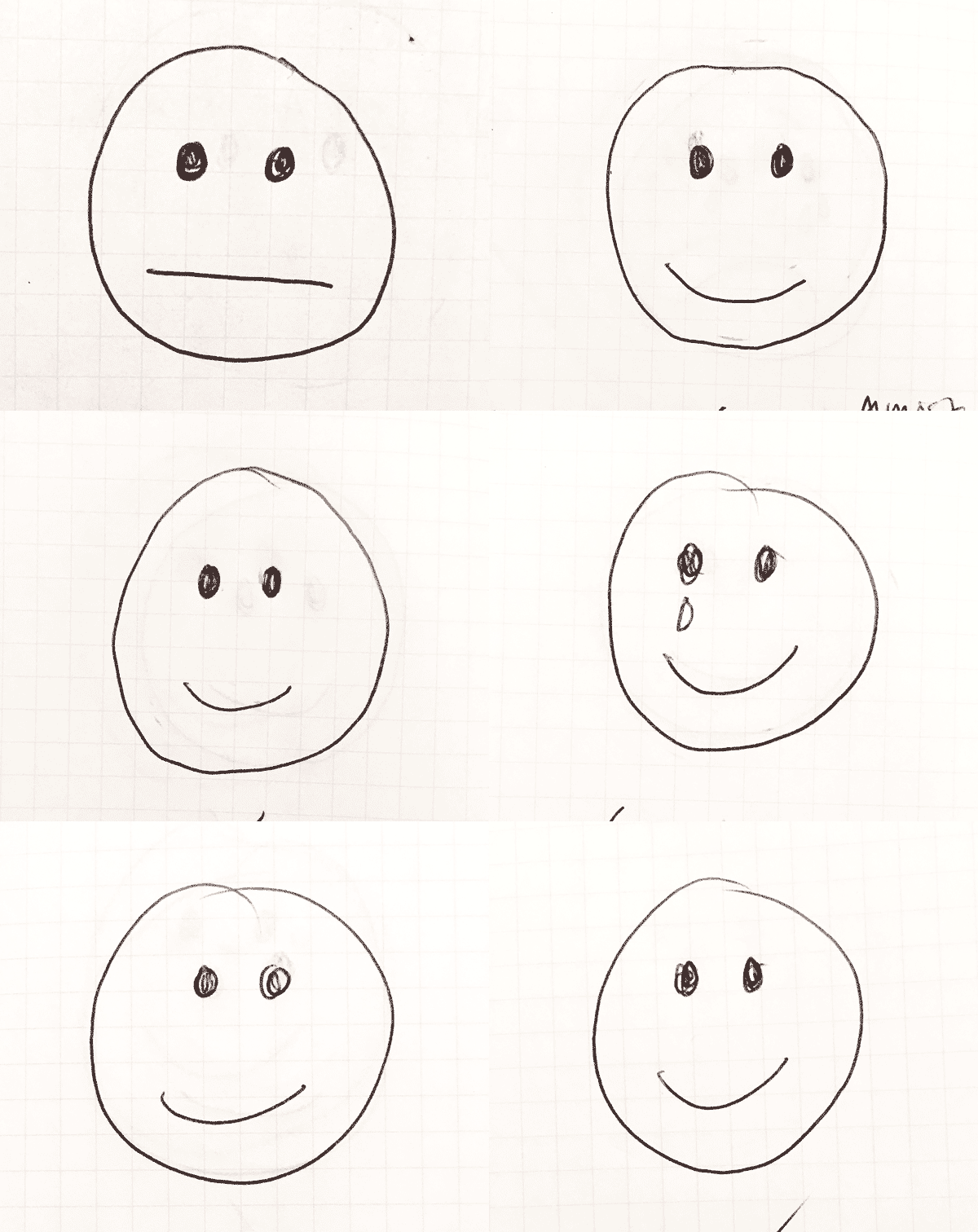
<p>So, I converted a pink Field Notes into a daily cry journal. (I got the notebook from <a href="http://xoxofest.com">XOXO</a>, which felt pretty appropriate.) At the end of each day, I drew a face illustrating my emotions and marked whether I had cried (yes, no, almost). If I cried, I wrote down what the trigger was. This way, I could keep track of the things that were causing me stress and setting me off. And I told my manager, <a href="http://jason-huff.com">Jason</a>, about this plan so he could hold me accountable.</p>

<div class="jh-text-cms__img jh-text-cms__img--full-width">
  <img src="/uploads/2017-06-24-15.47.14-2.jpg" />
</div>

<p>I did this for two and a half months. And I realized a few things.</p>

<p>First, I realized that I was crying more than I thought I was. I have a habit of suppressing emotions at times (“I’m fine”, “It’s fine”) and this gave me <em>data</em> on how fine I actually was. I couldn’t hide from the fact that there was a lot that was stressing me out.</p>

<p>Second, that data made me realize that I wasn’t crying as often as I told myself I was. I know that’s in complete contradiction to the previous statement, but this journal made me appreciate how many tear-free days I had. A side effect of stress and anxiety is thinking that <strong>everything</strong> is awful. There were some really good days, and I had a <em>record</em> of those days. (One day, I even cried happy tears.)</p>

<p>Third, I could pinpoint exactly what was triggering me. It’s easy to get overwhelmed by stress, especially when it feels like it’s coming from all sides. Understanding the source of the stress, big or small, was an important part of this process.</p>

<p>And most importantly, I practiced asking for help. I talked to Jason about what was triggering me. And we worked together to figure out how to make those things better. I can’t expect to be able to handle everything on my own, no matter my title, and the pressure I was putting on myself was incredibly unhealthy. One by one, Jason and I came up with plans to deal with the things causing me stress.</p>

<div class="jh-text-cms__img jh-text-cms__img--full-width">
  <img src="/uploads/dont-cry.gif" />
  <p class="jh-text-cms__img__caption">All of my feelings</p>
</div>

<p>Technically, I didn’t hit my goal. I haven’t stopped crying and I don’t think I will; crying will always be part of how I deal with my emotions. But I feel more capable of recognizing the good kind of crying from the bad kind. And I feel more equipped to handle my next slump, whenever that may be.</p>

<hr />

<blockquote class="twitter-tweet" data-lang="en"><p lang="en" dir="ltr">Too real. <a href="https://t.co/lFL8GzqFfx">pic.twitter.com/lFL8GzqFfx</a></p>&mdash; Jessica Harllee 🌞 (@harllee) <a href="https://twitter.com/harllee/status/817026056616022017">January 5, 2017</a></blockquote>
<script async="" src="//platform.twitter.com/widgets.js" charset="utf-8"></script>]]></content><author><name></name></author><category term="personal" /><category term="reflections" /><category term="lessons learned" /><summary type="html"><![CDATA[On crying at work, and that time it got to be too much to handle.]]></summary></entry><entry><title type="html">Crafting an effective working group</title><link href="http://www.jessicaharllee.com/notes/crafting-an-effective-working-group/" rel="alternate" type="text/html" title="Crafting an effective working group" /><published>2017-06-20T08:35:00-04:00</published><updated>2017-06-20T08:35:00-04:00</updated><id>http://www.jessicaharllee.com/notes/crafting-an-effective-working-group</id><content type="html" xml:base="http://www.jessicaharllee.com/notes/crafting-an-effective-working-group/"><![CDATA[<p>At Etsy, some of the most interesting (and most difficult!) challenges we face as a design team don’t always have a clear or obvious owner. Our initiatives can span multiple product teams or even multiple disciplines. Without a dedicated team of people solving these problems, they’re easy to ignore.</p>

<p>One way that we try and tackle cross-team challenges at Etsy is by using working groups. A working group is a defined set of people, usually coming from multiple teams or disciplines, with a clear problem to overcome. Some have very specific goals and disband after a few months, others have existed over multiple years and evolved over time.</p>

<p>I’ve been involved in a number of design-focused working groups at Etsy, both in a leadership role and as a participant. I’ve seen things that work really well, and I’ve also seen them struggle to align and hit their goals. To help you set your working group up for success, I’ve put together some guidelines for organizing an effective one.</p>

<h2 id="1-establish-agoal">1. Establish a goal</h2>

<p>First and foremost, working groups are created to solve a specific problem facing an organization. When the group is created, spend some time defining the goal. Since the problems you’re tackling can be broad and fuzzy, having an explicit goal can also help you decide what is and isn’t the responsibility of the group. Creating alignment on what the goal is will help you evaluate whether the group is successful down the line.</p>

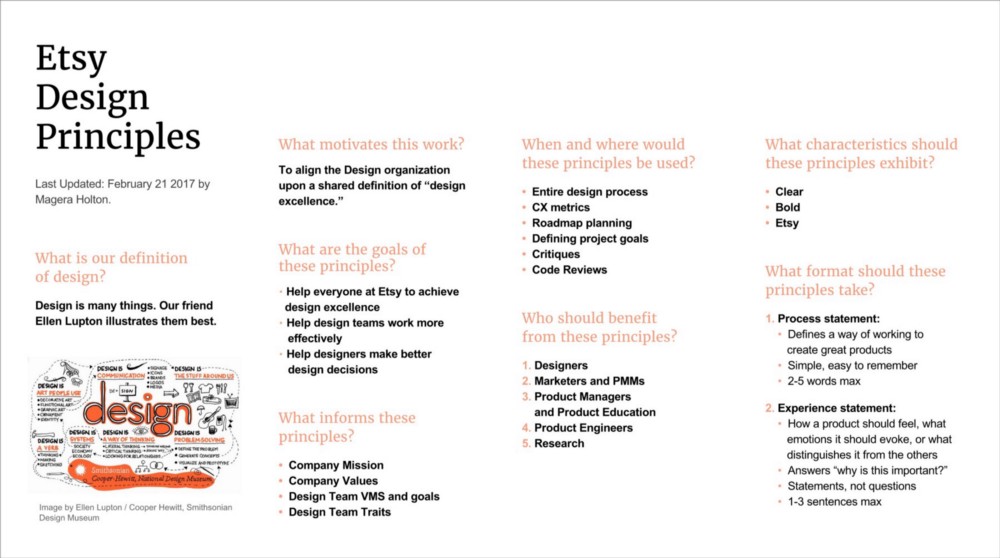
<p>When the Design Team leads communicated our team-wide strategy of achieving “design excellence”, a lot of questions came up around what exactly “excellence” meant. To help answer those questions, the Design Principles working group was formed with the clear goal of creating design principles to define design excellence.</p>

<div class="jh-text-cms__img jh-text-cms__img--full-width">
  <img src="/uploads/principles.jpeg" />
  <p class="jh-text-cms__img__caption">We reviewed the goals of the Design Principles working group at every meeting</p>
</div>

<p>Once you have a goal, make sure everyone understands it. Review the goal at the beginning of every meeting to remind group members of what they’re trying to achieve. Communicate the goal of the group broadly as a way to establish yourselves as the people dedicated to, and invested in, finding a solution.</p>

<h2 id="2-designate-a-facilitator">2. Designate a facilitator</h2>

<p>When the group is formed, the executive sponsor (or whichever leader establishes the group) should designate a facilitator. The facilitator runs meetings and keeps the group moving forward. Without a clear facilitator, meetings can become ineffective and group members won’t be held accountable for the work.</p>

<p>A facilitator’s job <em>isn’t</em> to say yes or no; sometimes the facilitator isn’t also the “decider”. Facilitation is more about making sure that progress toward goals is being made.</p>

<p>Facilitators are responsible for things like:</p>

<ul>
  <li>Setting up meetings</li>
  <li>Making sure the meetings are effective</li>
  <li>Running on-time and inclusive meetings</li>
  <li>Setting the agenda for each meeting in advance</li>
  <li>Holding the group accountable to the executive sponsor</li>
</ul>

<p>Oh, and the facilitator doesn’t have to be a manager; facilitation can be a great leadership opportunity for individual contributors. It gives ICs an opportunity to flex some organization and communication muscles in a different capacity than they might be used to in their day-to-day design work.</p>

<h2 id="3-define-operations">3. Define operations</h2>

<p>Even though the work might not be a typical project with a typical team, it’s important to draw from the rituals of your other projects to make sure everything runs smoothly.</p>

<p>Working groups should have regularly scheduled meetings or collaborative work sessions to check in on progress, answer questions, and plan for future work. Meeting regularly will help remind group members of this work and give everyone face time with one another. If there’s any urgency to the work or a lot of smaller pieces to keep track of, it might even be helpful to add a weekly standup for status check-ins.</p>

<p>In addition to regular meetings, there should be ways for group members to communicate with one another in between meetings. At Etsy, we usually have a Google group and a Slack channel for informal, broad communication. These are also helpful channels for anyone outside of the group with a question to get in touch with working group members.</p>

<p>There may be other project rituals that your company uses, like Jira boards or wiki pages, that will help establish a smooth process. Use whatever communication and process tools you have at your disposal to set your group up for success.</p>

<h2 id="4-set-milestones">4. Set milestones</h2>

<p>Okay, so now you have the mission of the group, the facilitator, and some guidelines for operating. Time to start getting to work, right? Hold your horses.</p>

<p>One of the reasons I’ve seen working groups struggle to move forward and make progress is a lack of milestones.</p>

<p>Without clear milestones, it’s impossible to judge the pace at which you must work. This is especially true when the work is done on top of your regular workload. The worst thing that could happen to your working group would be that everyone chips away at the problem but never actually ships anything. In order to be effective, the group has to ship; in order to ship, milestones should be established from the beginning.</p>

<p>The Style Guide working group operated on a quarterly basis. At the beginning of each quarter, we kicked off a round of projects with the expectation that you’d be able to finish the work by the end of the quarter. Having a timeline helped designers scope their work; group members would only commit to doing projects they knew they could ship within a quarter.</p>

<p>The Design Principles working group set our sights on presenting the principles at the quarterly Design All Hands, since it would be a great time to reach every member of the design team. We ended up missing the deadline; we shared our progress and set a new deadline. And that’s okay. That milestone enabled us to work at a healthy pace; without it, we could easily have gone in circles without any incentive to move forward. Milestones can (and should!) change based on how progress is being made.</p>

<h2 id="5-operate-transparently">5. Operate transparently</h2>

<p>Since the problems you’re solving can span your whole organization, chances are that other people outside of the group will be very invested in the work that the group does. To ensure the group isn’t working in a bubble or duplicating work, find ways to broadly share progress, get feedback, and operate transparently.</p>

<p>Some methods that we’ve used for creating transparency include:</p>

<ul>
  <li>Creating a Slack channel</li>
  <li>Creating a Google Group</li>
  <li>Sending weekly update emails</li>
  <li>Creating open meetings</li>
  <li>Sending surveys</li>
</ul>

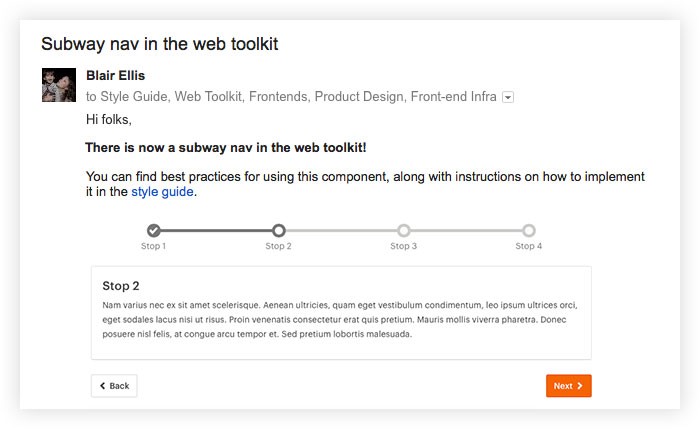
<div class="jh-text-cms__img jh-text-cms__img--full-width">
  <img src="/uploads/announcements.jpeg" />
  <p class="jh-text-cms__img__caption">We frequently emailed relevant teams when there were important updates to the web toolkit</p>
</div>

<p>We maintained Etsy’s web toolkit through a working group in the early days. The web toolkit was rapidly being adopted by every product team, so there were a lot of people invested in our progress. Whenever we had new patterns, bug fixes, or major updates to functionality, we sent announcement emails across the company to make it easy for everyone to keep up with our progress.</p>

<p>Another way to operate transparently is to open up some or all of your meetings to everyone. The Style Guide group meetings were mandatory for anyone working on a quarterly project, but we wanted to give everyone a way to keep up with the work. We added teams invested in the work to our bi-weekly meeting invitation so they could pop in whenever they wanted.</p>

<p>Lastly, there might be ways to include people outside the working group. The feedback of the larger design team was critical to the success of the design principles. We sent surveys, conducted interviews, and ran critiques to get feedback from our target audience and stakeholders throughout the process. (<a href="https://medium.com/etsy-design/creating-etsys-design-principles-4faf31914be3">Read more about our process here!</a>) By the time we shared the final principles, everyone was well-informed and our stakeholders weren’t surprised.</p>

<p>It might feel counter-intuitive or spammy to send this info out widely, but sharing too much information is much better than leaving people who care about the work in the dark.</p>

<h2 id="6-evaluate-yourprocess">6. Evaluate your process</h2>

<p>It’s important to evaluate and iterate on how you’re working together, especially since the work can be more ad-hoc than regular projects. Your time is precious; every little process improvement that you can make will have a big impact on the effectiveness of the group.</p>

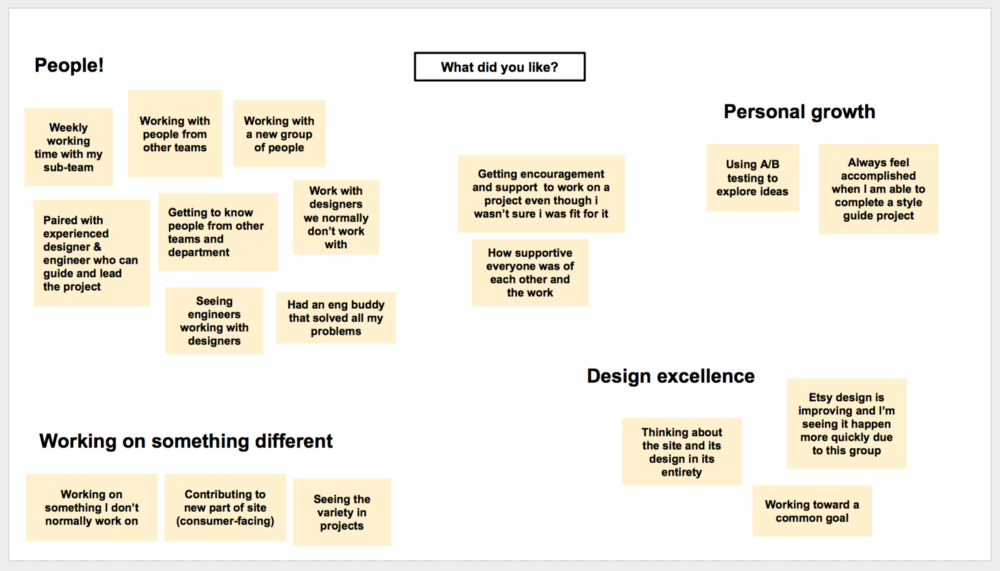
<div class="jh-text-cms__img jh-text-cms__img--full-width">
  <img src="/uploads/retrospectives.png" />
  <p class="jh-text-cms__img__caption">The Style Guide working group ran remote-friendly retrospectives to understand what was working well and what was challenging</p>
</div>

<p>One way that we evaluate our process at Etsy is to run retrospectives. The Style Guide working group was able to make huge improvements by running retrospectives regularly. One insight we uncovered was designers were rarely able to devote as much time to the work as they thought. This helped us encourage participants to keep projects small. Another insight was that participants didn’t realize until late in the quarter that they needed engineering help. The following quarter, we recruited engineers at the very beginning of projects.</p>

<p>Surveys are another way to get external feedback about your effectiveness. The web toolkit working group sent a few surveys to designers and engineers to ask about their use of the web toolkit, documentation, and pain points. This helped us get feedback on a larger scale and prioritize certain features.</p>

<h2 id="7-discuss-the-necessity-of-thegroup">7. Discuss the necessity of the group</h2>

<p>The odds are high that you’re involved with the working group in addition to your day-to-day work. This extra work can really add up and occupy a lot of your time. You should feel comfortable having frank conversations about the group’s future.</p>

<p>Use your goal as a way to evaluate whether the group is still needed.</p>

<ul>
  <li>Have you fixed the problem you set out to solve?</li>
  <li>Has the problem been solved another way?</li>
  <li>Has the company changed? Has its needs changed?</li>
  <li>Is the group still the most effective way to solve this problem?</li>
</ul>

<p>Your group’s regular evaluations and retrospectives are the perfect opportunities to bring these questions up.</p>

<p>Since the Design Principles working group’s goal was to create a set of design principles, the group disbanded when the principles were written. The group may end up reforming in an entirely new shape, but the group as we knew it wasn’t necessary anymore.</p>

<p>The dissolution of a working group can be the result of processes and teams changing for the better. Our design leadership team made the case for having a team dedicated full-time to design systems by pointing to the success of the Style Guide working group. When the working group began to wind down, it was because we had a team of designers solving these hard problems full-time, and our existing process no longer made sense. In this case, the working group disbanding was a huge success!</p>

<h2 id="8-celebrate-your-victories">8. Celebrate your victories</h2>

<p>The best part of the Style Guide working group was the demo day at the end of the quarter. We invited multiple teams across Etsy, shared snacks and beverages, and watched as everyone demoed their hard work from the past few months. Seeing all of the work back-to-back felt so good; we really felt like we were making a huge impact on Etsy.</p>

<div class="jh-text-cms__img jh-text-cms__img--full-width">
  <img src="/uploads/demo-days.jpeg" />
  <p class="jh-text-cms__img__caption">Style Guide demo days were a great way to celebrate our hard work</p>
</div>

<p>Demo days are just one way to celebrate work. Team-wide emails are a low-investment way to share progress and to give shoutouts to working group members. Regular team meetings like an All Hands can be an opportunity to give a quick plug for the working group and an overview of your progress. We’ve also used <a href="http://medium.com/etsy-design">our Medium blog</a> as a way to celebrate our work and share learnings outside of Etsy.</p>

<p>Whatever your company’s practices for recognition, make sure that your group takes the time to celebrate accomplishments. You’ve earned it!</p>

<hr />

<p>So, in summary:</p>

<ol>
  <li>Establish a goal</li>
  <li>Designate a facilitator</li>
  <li>Define operations</li>
  <li>Set milestones</li>
  <li>Operate transparently</li>
  <li>Evaluate your process</li>
  <li>Discuss the necessity of the group</li>
  <li>Celebrate your victories</li>
</ol>

<p>Working groups can help your team solve complex, cross-functional problems. The nature of side projects means it’s crucial to design a structure that will set you up for success. Hopefully you can apply the lessons that we’ve learned along the way to solve some challenging problems in your own organization!</p>

<p><em>Thanks to Jason Huff and Jedediah Baker</em></p>

<p><em>This post originally appeared on <a href="https://medium.com/etsy-design">Etsy Design’s Medium blog</a></em></p>]]></content><author><name></name></author><category term="etsy" /><category term="how to" /><category term="design" /><category term="process" /><summary type="html"><![CDATA[At Etsy, some of the most interesting (and most difficult!) challenges we face as a design team don’t always have a clear or obvious owner. Our initiatives can span multiple product teams or even multiple disciplines. Without a dedicated team of people solving these problems, they’re easy to ignore.]]></summary></entry><entry><title type="html">Design Details episode 81, live at Etsy</title><link href="http://www.jessicaharllee.com/notes/design-details-episode-81/" rel="alternate" type="text/html" title="Design Details episode 81, live at Etsy" /><published>2015-11-25T14:51:00-05:00</published><updated>2015-11-25T14:51:00-05:00</updated><id>http://www.jessicaharllee.com/notes/design-details-episode-81</id><content type="html" xml:base="http://www.jessicaharllee.com/notes/design-details-episode-81/"><![CDATA[<p><a href="https://twitter.com/uberbryn">Bryn Jackson</a> and <a href="https://twitter.com/brian_lovin">Brian Lovin</a> run <a href="http://spec.fm/podcasts/design-details">Design Details</a>, an interview podcast with designers. They came to Etsy to do a recording of a panel-style interview with me, <a href="https://twitter.com/jedmund">Justin Edmond</a>, and <a href="https://twitter.com/notdetails">Joel Califa</a>. It was super fun but a little scary—it was recorded in front of a live audience! I had a ton of fun talking about things like how we all became designers, management vs. individual contributor roles, and Neopets.</p>

<p>Listen here: <a href="http://spec.fm/podcasts/design-details/21184">http://spec.fm/podcasts/design-details/21184</a></p>]]></content><author><name></name></author><category term="design" /><category term="irl" /><summary type="html"><![CDATA[Bryn Jackson and Brian Lovin run Design Details, an interview podcast with designers. They came to Etsy to do a recording of a panel-style interview with me, Justin Edmond, and Joel Califa. It was super fun but a little scary—it was recorded in front of a live audience! I had a ton of fun talking about things like how we all became designers, management vs. individual contributor roles, and Neopets.]]></summary></entry><entry><title type="html">Sharing Our Work: Testing and Feedback in Design on A List Apart</title><link href="http://www.jessicaharllee.com/notes/sharing-our-work-testing-and-feedback-in-design-on-a-list-apart/" rel="alternate" type="text/html" title="Sharing Our Work: Testing and Feedback in Design on A List Apart" /><published>2015-08-11T15:31:00-04:00</published><updated>2015-08-11T15:31:00-04:00</updated><id>http://www.jessicaharllee.com/notes/sharing-our-work-testing-and-feedback-in-design-on-a-list-apart</id><content type="html" xml:base="http://www.jessicaharllee.com/notes/sharing-our-work-testing-and-feedback-in-design-on-a-list-apart/"><![CDATA[<p>I had the honor of writing an article for A List Apart on the role research can play as we make our way through the design process. I had been reading A List Apart and referencing it since the earliest days that I was building websites, so this opportunity was especially exciting to me!</p>

<p>Read <a href="http://alistapart.com/article/sharing-our-work-testing-feedback-in-design">Sharing Our Work: Testing and Feedback in Design</a> on A List Apart</p>

<p><em>Thanks to Sara Wachter-Boettcher and Lisa Maria Martin for their incredible editing</em></p>]]></content><author><name></name></author><category term="design" /><category term="etsy" /><category term="irl" /><category term="process" /><summary type="html"><![CDATA[I had the honor of writing an article for A List Apart on the role research can play as we make our way through the design process. I had been reading A List Apart and referencing it since the earliest days that I was building websites, so this opportunity was especially exciting to me!]]></summary></entry><entry><title type="html">Redesigning with Confidence at Industry Conf</title><link href="http://www.jessicaharllee.com/notes/redesigning-with-confidence-at-industry-conf/" rel="alternate" type="text/html" title="Redesigning with Confidence at Industry Conf" /><published>2015-08-02T15:40:00-04:00</published><updated>2015-08-02T15:40:00-04:00</updated><id>http://www.jessicaharllee.com/notes/redesigning-with-confidence-at-industry-conf</id><content type="html" xml:base="http://www.jessicaharllee.com/notes/redesigning-with-confidence-at-industry-conf/"><![CDATA[<p>This past April I spoke at <a href="https://industryconf.com">Industry Conf</a> in Newcastle upon Tyne, United Kingdom. Industry Conf covers practical topics about the web, ranging from research to design to backend development.</p>

<p>I spoke about two major redesigns that we did at Etsy, a redesign of our seller onboarding and the <a href="http://jessicaharllee.com/work/etsy-listings-manager/">Listings Manager redesign</a>, and contrasted the different methods we used to gain confidence in the major changes we made.</p>

<iframe width="560" height="315" src="https://www.youtube.com/embed/MIbNWSulLcc?list=PLxIVE2ZZ0maCWjZhoIAiL0lkif9_a2k7F" frameborder="0" allowfullscreen=""></iframe>

<p><a href="https://www.youtube.com/playlist?list=PLxIVE2ZZ0maCWjZhoIAiL0lkif9_a2k7F">Watch other videos from the conference here</a></p>]]></content><author><name></name></author><category term="design" /><category term="etsy" /><category term="irl" /><category term="process" /><summary type="html"><![CDATA[This past April I spoke at Industry Conf in Newcastle upon Tyne, United Kingdom. Industry Conf covers practical topics about the web, ranging from research to design to backend development.]]></summary></entry></feed>